Surgical ultrasound continues to play a defined and necessary role in modern operating rooms. Despite advances in pre-operative CT and MRI, hospitals and surgical centers rely on intraoperative imaging to address anatomical changes that occur during live procedures. In 2026, purchasing decisions around surgical ultrasound are increasingly based on measurable clinical value, workflow impact, and long-term operational efficiency rather than feature lists alone.
Why Intraoperative (Surgical) Ultrasound Delivers Measurable Value in the OR
Surgical ultrasound is used in operating rooms to provide real-time imaging after incision, when anatomy no longer reflects pre-operative scans. During procedures involving soft tissue, vascular structures, and tumor margins, intraoperative ultrasound allows surgeons to reassess anatomy, confirm findings, and make adjustments based on current conditions rather than pre-surgical assumptions.
While CT and MRI remain essential for planning, they cannot account for tissue shift, organ movement, or deformation during surgery. Intraoperative ultrasound fills this gap by supporting live decision-making at critical points in the procedure, improving surgical confidence and reducing uncertainty.
From an operational standpoint, surgical ultrasound also reduces reliance on radiation-based intraoperative imaging. In many cases, it replaces or limits the need for fluoroscopy or intraoperative CT, simplifying OR workflow and lowering cumulative radiation exposure for patients and staff.
In oncologic and complex cases, ultrasound is routinely used to assess lesion boundaries, vascular involvement, and residual tissue during resection. This supports margin verification during the same procedure and helps reduce the likelihood of incomplete resections and repeat interventions.
Modern surgical ultrasound systems are designed specifically for the operating room. Features such as compact footprints, rapid system readiness, sterile-field operation, and specialized intraoperative and laparoscopic probes allow imaging to be performed without disrupting surgical flow.
For these reasons, hospitals continue to invest in dedicated surgical ultrasound platforms rather than adapting general diagnostic systems. Systems designed for intraoperative use are more consistently adopted, better integrated into workflows, and deliver measurable clinical and operational value.
What “Best” Means for Surgical Ultrasound Systems in 2026
For hospitals and surgery centers, “best” in 2026 is not a generic image-quality claim. It is a fit assessment across sterile workflow, probe ecosystem, intraoperative imaging performance, and how reliably the system supports real cases (open, laparoscopic, and robotic-assisted). The systems below are commonly short-listed because they map to those operational realities, either as dedicated intraoperative platforms or as premium shared-service systems that can support procedural imaging when configured correctly.
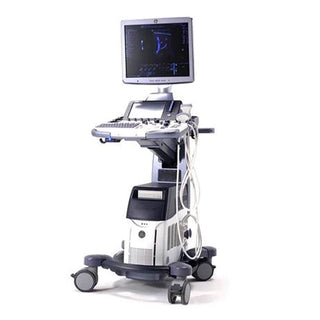
GE HealthCare / BK Medical bk5000 (dedicated intraoperative + robotics)
Built for intraoperative use with emphasis on lesion margin visualization and surgical workflow. Supports intraoperative, robotic, and neurosurgery applications, and is positioned for real-time surgical visualization with specialized tools and sterile-field control options.
GE HealthCare / BK Medical bkActiv S Series (next-gen dedicated iUS, workflow-forward)
Positioned as a next-generation intraoperative ultrasound line, with an emphasis on surgical guidance and modern OR workflows. This is typically evaluated where the department wants a dedicated platform but is optimizing for faster adoption and consistent use across services.
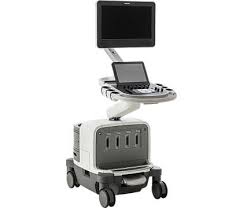
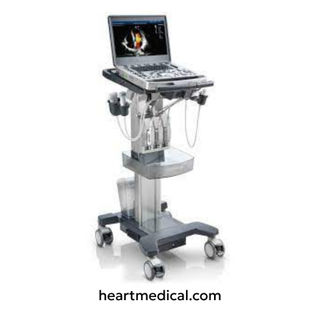
Philips EPIQ Elite (premium shared-service; strong for procedural imaging, elastography, advanced quantification)
Often chosen when hospitals want a premium cart that can cover high-end imaging plus procedural guidance across multiple departments. EPIQ Elite is positioned around advanced imaging methods (including elastography) and high-end performance that can translate well into interventional/procedural workflows depending on probe selection and setup.
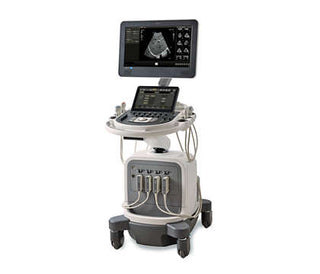
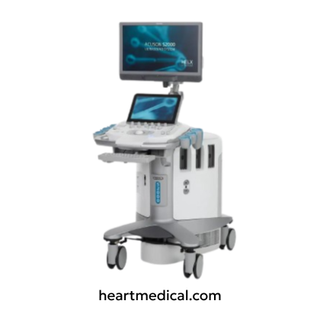
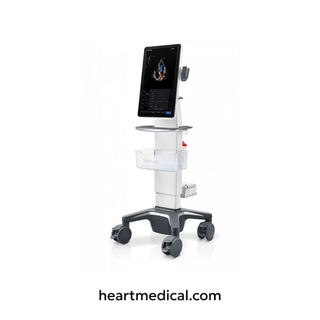
Siemens Healthineers ACUSON Sequoia (depth/sensitivity; consistency across users; interventional toolbox)
Frequently shortlisted for challenging-body habitus imaging, depth performance, and user-to-user consistency, with an “advanced applications toolbox” that includes support for interventional procedures. Practical fit: hospitals that want a premium general imaging platform that can also support guided procedures and high-demand scanning.
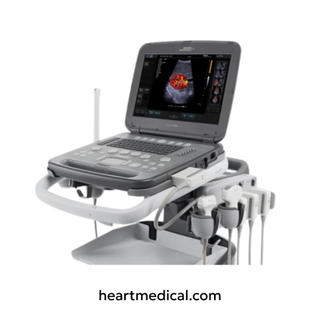
Mindray Resona A20 (premium imaging; newer platform; value-leaning premium alternative)
Positioned as a high-end system focused on imaging clarity and modern platform capabilities (AIT). Often evaluated when the hospital wants premium imaging performance with a value-sensitive approach, while still maintaining a strong shared-service footprint.
| Platform | Primary OR Role | Sterile Workflow Fit (What to Validate) | Probe Strategy (What Usually Drives the Buy) | Intraoperative Strength (Case-Level Benefit) | Documentation & Integration (What Ops Teams Ask) | Procurement Signal (Value / TCO Logic) |
|---|---|---|---|---|---|---|
| GE / BK Medical bk5000 | Dedicated intraoperative imaging and surgical guidance (incl. robotics programs). | Validate sterile-field interaction, intraop controls, cart footprint in the OR, and how quickly the team can acquire/optimize images without breaking flow. | Driven by intraoperative and laparoscopic transducer availability; probe selection is typically service-line specific (urology, general surgery, neuro). | Designed around real-time lesion localization and margin-related decision points during live surgery. | Validate image capture workflow, case documentation, and routing to your hospital systems (PACS/archiving) per policy. | Value is justified by consistent intraop utilization (not “shared-service compromise”) and reduced friction in high-stakes cases. |
| GE / BK Medical bkActiv S Series | Dedicated intraoperative program standardization across OR teams. | Validate day-to-day usability: sterile handling model, speed to “diagnostic-quality” images, and how easily multiple surgeons adopt the workflow. | Typically selected where the department is building a standardized intraop probe set and wants predictable use across cases. | Evaluated on repeatability: consistent imaging support at key intraoperative checkpoints. | Validate how clips/images are stored, labeled, and accessed for QA, tumor board reviews, and documentation. | Value case leans on adoption, standardization, and a dedicated intraop fleet strategy rather than “one cart for everything.” |
| Philips EPIQ Elite | Premium shared-service platform used for advanced imaging + procedural guidance depending on configuration. | Validate cleaning/handling protocol alignment, probe reprocessing requirements, and whether the setup can remain “procedure-ready” without OR disruption. | Often chosen for broad transducer coverage across departments; probe strategy is about maximizing utilization outside the OR as well. | Strength is advanced imaging stack and quantification support for complex characterization and guided procedures. | Validate reporting workflow, interoperability, and whether procedural documentation fits your service-line governance. | Value is driven by cross-department utilization and premium imaging performance rather than dedicated intraop specialization. |
| Siemens ACUSON Sequoia | Premium imaging confidence with procedural/interventional capability where needed. | Validate setup speed, operator consistency across shifts, and whether procedural tools meet your department’s case requirements. | Selected when transducer plan supports high-demand imaging plus guided procedures; typically part of a shared-service strategy. | Emphasis on sensitivity/depth performance and consistent results in challenging patients. | Validate integration, user permissions, audit trails, and standardization for multi-operator environments. | Value is justified by reliability, standardization, and broad coverage rather than being purely an intraop-focused purchase. |
| Mindray Resona A20 | Premium-capable platform selected for performance with a value-conscious footprint. | Validate usability, protocol consistency, cleaning workflow, and whether the platform can support procedural imaging without adding operational friction. | Probe strategy is typically about coverage: high-demand imaging needs across departments with fewer redundant carts. | Evaluated on real-world image clarity and efficiency in demanding scans and characterization work. | Validate interoperability, report export, storage, and whether it matches your institutional documentation standards. |
Value case typically leans on performance-per-dollar and broad utilization across services. |
How Hospitals Should Select a Surgical Ultrasound System by Service Line
After shortlisting platforms, hospitals typically narrow decisions based on who will use the system, in which procedures, and how often. In surgical ultrasound, value is not driven by the cart alone. It is driven by alignment between service line requirements, probe availability, and intraoperative workflow.
Below is how hospitals and surgical centers commonly evaluate systems by clinical use, rather than by brand claims.
General Surgery and Hepatobiliary (HPB)
These services prioritize lesion localization, margin assessment, and vascular mapping during live surgery. Systems are evaluated for near-field resolution, depth performance, and responsiveness when tissue characteristics change during manipulation. Probe availability for open intraoperative scanning is often the primary driver of the purchase decision.
Hospitals performing a high volume of liver or pancreatic cases typically favor platforms with a strong intraoperative imaging focus rather than shared diagnostic systems.
Colorectal and Minimally Invasive Surgery
In colorectal and advanced laparoscopic cases, laparoscopic ultrasound probes are often the deciding factor. The system must support stable imaging in confined spaces, reliable orientation, and efficient image optimization without disrupting surgical flow.
Here, the evaluation centers on how well the platform supports laparoscopic workflows rather than raw imaging specifications.
Urology
Urology departments typically assess surgical ultrasound systems for precision guidance, particularly in prostate, renal, and pelvic procedures. Probe ergonomics, intraoperative control, and image consistency across operators are critical, especially in high-volume programs.
Hospitals with robotic-assisted urology programs often require compatibility with robotic workflows and predictable intraoperative performance.
Neurosurgery and Spine
Neurosurgical use places emphasis on high-resolution near-field imaging, tissue differentiation, and consistent visualization of critical structures. Systems are assessed for stability, repeatability, and how effectively they support decision-making during delicate resections.
Adoption in neurosurgery is closely tied to surgeon confidence and ease of intraoperative use rather than feature breadth.
Multi-Service Line Hospitals
Hospitals serving multiple surgical specialties often face a strategic choice:
- Invest in a dedicated intraoperative platform for consistent OR use, or
- Deploy a premium shared-service system that can support procedural imaging across departments.
In these environments, procurement teams weigh utilization rates, probe overlap, training requirements, and long-term service costs to determine overall value.
Value for Money & Total Cost of Ownership (TCO)
Reviewed by Heart Medical Clinical Applications Team
Clinical and technical specialists ensuring accuracy and relevance across all Heart Medical content.
Related Products