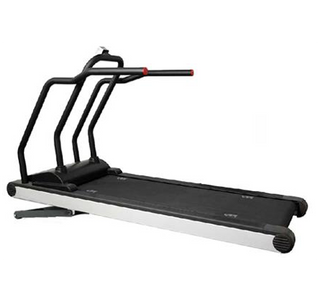
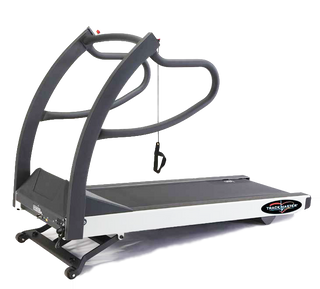
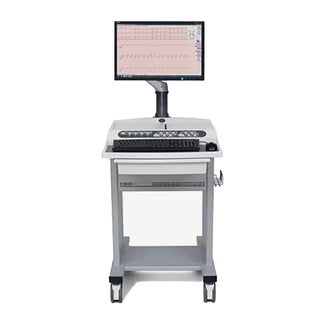
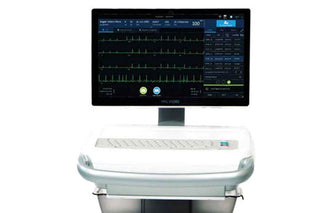
Stress test systems help doctors check how well a person’s heart works under stress. These tests are usually done under stressful conditions, hence the name. They include exercises like walking (sometimes running) on a treadmill or riding a stationary bike that makes the heart beat faster.
But how does it help?
As the patient exercises, the heart pumps out more blood and works harder to supply oxygen to the body. This increased workload can reveal problems that might not show up when the heart is at rest.
How do Stress Testing Machines Work?
The stress test machine has several small, sticky patches called electrodes that are placed on the patient’s chest, arms, and sometimes legs.
These electrodes are connected to an electrocardiogram (ECG) machine, which tracks the heart’s electrical activity such as:
- Heart rate
- Blood pressure
- Oxygen levels
So if there’s reduced blood flow to any part of the heart due to blocked or narrowed arteries—the test can easily detect it. It also helps identify irregular heartbeats or signs of coronary artery diseases.
By pushing the heart to its limits in a controlled way, doctors can see how the heart reacts to stress. This procedure allows them to diagnose heart conditions more accurately and plan treatments like medications or surgeries.
Types of Stress Testing
There are three main types of stress testing. This is because patients of different age groups and health conditions have different needs. So whether or not a patient is fit enough for exercise testing, there’s an alternative method to evaluate their heart functions.
1. Exercise Stress Testing
This is the most common type of stress testing. The patient is made to walk (mild run) on a treadmill or ride a bike, while their heart activity is being monitored. It helps in detecting issues like blocked arteries or irregular heart rhythms under physical stress.
2. Pharmacologic Stress Testing
For patients who cannot exercise, pharmacologic stress testing is used. Here, medications are given to stimulate the heart, mimicking the effects of exercise. The patient’s heart is monitored as if they were physically exerting themselves.
3. Stress Echocardiography
This test combines an ultrasound of the heart with stress testing. It uses sound waves to create images of the heart before and after exercise, allowing the doctors to see how well the heart pumps under stress.
Benefits of Stress Test Systems
Stress testing offers a lot of benefits when it comes to assessing heart health. It’s a powerful diagnostic procedure that helps doctors in making an informed decision.
1. Early Detection of Heart Conditions
These systems help catch heart problems early, even before big symptoms show up. A lot of heart issues go unnoticed when heart examinations are done without any physical pressure. But when it’s monitored under stress, any heart or artery blockage can be detected sooner so treatment can be provided promptly.
2. Non-Invasive Diagnostic Tool
One of the best things about stress tests is that they are non-invasive. There’s no need for any complex procedures. Instead, it's a simple setup with the monitor, electrodes or blood pressure cuffs, and the exercise machine. This makes it easy to use in any clinical setting to assess the heart.
3. Customized Testing Options
Not every patient can bear the same level of stress test. Some may be able to exercise on a treadmill, while others may not. This is why stress test systems offer flexible options to fit each patient’s unique needs.
4. Accurate Assessment
Stress test systems provide real-time data on how well the heart is functioning under stress. With precise measurements of heart rate and other important vitals, doctors can get a clear picture of the heart condition.
5. Predict Health Issues
Beyond just diagnosing conditions, stress testing can also help predict future heart problems. It identifies how the heart reacts under stress, doctors can better anticipate risks like heart attacks for earlier intervention and prevention.
Who Needs Stress Testing System
Stress testing system is particularly helpful for people at risk of heart conditions or those showing any symptoms of heart problems.
Here is a detailed look at who might benefit from a stress test:
- People with symptoms of heart disease: Anyone experiencing symptoms like chest pain, shortness of breath, dizziness, or fatigue, especially during physical activity, may need a stress test. The symptoms can be a sign of coronary artery disease, blocked arteries, or other heart-related issues.
- People with a Family History of Heart Disease: If you have a family history of heart disease, stress testing can be an important preventive measure. It allows doctors to check for early signs of heart problems—even if you don’t have any symptoms yet.
- People who’ve had a Heart Attack or Heart Surgery: After a heart attack or surgery like, bypass or stent replacement, doctors often use stress tests to evaluate the heart’s recovery and check if blood flow has improved.
- People with High-Risk Factors: High blood pressure, high cholesterol or diabetes, puts someone on a high-risk factor. Even smokers are at greater risk of heart attacks. A stress test can help monitor the heart of these individuals and detect any early warnings.
- Athletes: Competitive athletes who engage in strenuous physical activity may undergo stress tests to ensure their hearts are in top condition.
- Patients Preparing for Surgery: For anyone scheduled for major surgeries, especially those involving the heart or lungs, stress testing is often recommended. It helps doctors determine if the heart is strong enough to handle the stress of the operation.
Summing up
Stress test systems play a crucial role in heart health management. They’re a great tool for every hospital and heart health department to ensure that patients are given the best treatment based on their situation. Heart Medical offers a wide range of stress testing kits which allow for precise and easy diagnosis anywhere. Contact us for more details on the best system. For high-quality equipment and more details, check out our stress test equipment selection.
Reviewed by Heart Medical Clinical Applications Team
Clinical and technical specialists ensuring accuracy and relevance across all Heart Medical content.