Philips Ultrasound Workspace is a cardiovascular imaging software platform that helps cardiology departments review echocardiography studies, analyze images, and create structured reports all in one workflow. It is built on the TOMTEC‑ARENA platform, allowing clinicians to go from study review to final report without needing to switch between different tools or systems.
The platform improves measurement consistency, reduces reporting differences among readers, and shortens turnaround times as the number of imaging studies increases. It supports both on-cart and off-cart use and works well in multi-vendor ultrasound environments using standard DICOM workflows.
For cardiology teams, Philips Ultrasound Workspace is not just an add-on. It serves to standardize how echo studies are reviewed, analyzed, and reported across various users, locations, and devices.
Philips Ultrasound Workspace in 60 Seconds
Philips Ultrasound Workspace is a cardiovascular ultrasound software solution used for viewing, measuring, and reporting on echo studies. Clinicians can open studies, take measurements, perform advanced analysis, and finalize reports in one place.
This platform follows a structured workflow, which helps to standardize study reviews across a department. As a result, it reduces differences between readers and increases measurement reliability. It offers flexible use, including on-cart during scanning and off-cart for review and reporting, so clinicians are not restricted to a single workstation and can work where it best suits their needs.
In essence, it is one platform for echo review, analysis, and reporting, designed to support consistency, efficiency, and scalability in cardiology departments.
Not sure if Philips Ultrasound Workspace is the right fit for your department?
Heart Medical is an authorized Philips Healthcare distributor. Our team can review your current workflow, compatibility requirements, and deployment options.
Request a workflow consultation

What Problem Does It Solve for a Cardiology Department?
Most cardiology departments are not limited by imaging equipment. The bigger challenge is workflow.
Common issues include:
- Too many manual steps: Clinicians shift between separate systems to review images, take measurements, and generate reports, which slows down the process.
- Variability between users and sites: Different readers may measure or report differently. This variability increases across multiple locations.
- Mixed equipment environments: Many departments use ultrasound systems from various manufacturers, making consistent analysis harder.
- Dependence on specific workstations: When review and reporting are limited to one location or system, studies get delayed and turnaround times extend.
- Limited access across locations: As departments grow, they need the same workflow available throughout, not just in one lab.
Philips Ultrasound Workspace addresses these issues by integrating viewing, analysis, and reporting into one standardized environment.
The Platform Foundation: TOMTEC‑ARENA
Philips Ultrasound Workspace is built on the TOMTEC‑ARENA platform, which is a well-established solution for cardiovascular image analysis and quantification. Philips uses Ultrasound Workspace as the commercial name for this platform, replacing older tools like QLAB for many cardiovascular imaging tasks.
For cardiology departments, this means two important things:
- The platform is proven and specifically designed for cardiac imaging.
- It can scale from a single workstation to a hospital-wide or multi-site deployment.
Adopting Philips Ultrasound Workspace is not about introducing something untested. It is about leveraging a mature platform intended for echo workflows.

What Teams Can Do Inside Philips Ultrasound Workspace
Standardizing your workflow across the department ensures that every clinician has the tools they need for high-quality cardiac assessment.
Viewing and Image Review
Clinicians can access echo studies in one environment, whether they are working on-cart during scanning or off-cart in a reading room. The experience is consistent across locations and use cases.
Web-based access within the hospital network allows studies to be reviewed without being tied to a specific workstation. This helps reduce delays and keep cases progressing.
Analysis and Quantification
The platform supports both common and advanced cardiac measurements in a structured workflow. This includes standard 2D measurements and advanced 3D analysis.
Because the method of measurement is consistent, results are more reproducible among users. This enhances reliability of reporting across the department.
Structured Reporting
Philips Ultrasound Workspace offers structured reporting tools that enable departments to standardize report formats. Templates can be customized to fit departmental protocols while keeping consistency among users and locations.
Structured reporting enhances readability, comparability, and data use while minimizing manual reporting effort.
AI Features in Philips Ultrasound Workspace That Save Time
Leveraging automated intelligence allows staff to focus on critical diagnostic decisions rather than repetitive manual tasks.
Auto Measure
Auto Measure automatically identifies anatomical structures and applies standard measurements with little manual input. This minimizes repetitive steps while ensuring consistency.
AutoStrain
AutoStrain assists with strain analysis for the left ventricle, right ventricle, and left atrium. It streamlines a typically time-consuming process and improves consistency among readers.
3D Quantification and Advanced 3D Tools
The platform includes advanced tools such as 3D Quantification, 3D Quantification Advanced, 4D LV-Analysis, Dynamic Heart Model, and Mitral Valve Navigator. These tools facilitate detailed cardiac assessment while keeping workflows practical for daily use.

Multi-Vendor Compatibility: No Ecosystem Lock-In
Philips Ultrasound Workspace is designed for multi-vendor settings. It supports standard DICOM workflows, allowing departments to analyze studies from various ultrasound systems on one platform.
While it is optimized for Philips systems like EPIQ and Affiniti, it also accepts data from GE, Siemens, Mindray, and other manufacturers. This enables departments to standardize analysis and reporting without needing to replace existing equipment.
Why This Matters for Productivity and Throughput
Operational benefits include:
- Fewer workflow bottlenecks
- More consistent measurements among users
- Faster report turnaround times
- Easier access across locations
- Better use of clinical staff time
For cardiology managers, this approach helps maintain consistency, monitor workflow, and scale operations as volumes increase.
How Philips Ultrasound Workspace Fits Hospital IT Environments
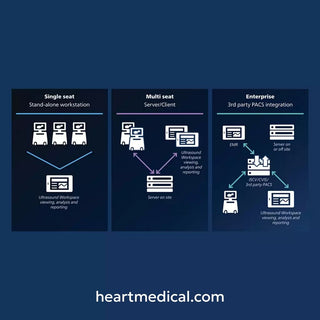
Philips Ultrasound Workspace can be set up in various ways based on departmental needs. It supports single-seat workstations and multi-seat network configurations for larger teams.
The platform integrates with PACS for image storage and retrieval. It also works alongside EMR and HIS systems to support reporting and data flow. Licensing is flexible, allowing departments to expand usage over time.
Is Philips Ultrasound Workspace Only for Philips Systems?
No. Philips Ultrasound Workspace supports multi-vendor echocardiography analysis through standard DICOM workflows.
Although it is part of the Philips ecosystem and optimized for Philips hardware, it is not limited to only Philips data. This allows departments to standardize workflows across a mixed equipment landscape.
Who Should Consider Philips Ultrasound Workspace?
The platform is ideal for:
- Cardiology departments looking to standardize echo workflows
- Multi-site health systems wanting consistent reporting across locations
- Teams working with mixed-vendor ultrasound data
- Labs aiming to reduce manual reporting effort and improve turnaround time
If the aim is to enhance consistency, minimize delays, and scale workflow without complicating processes, Philips Ultrasound Workspace is a great choice.
How to Purchase Philips Ultrasound Workspace Through Heart Medical
Heart Medical is an authorized Philips Healthcare distributor that supports cardiology departments with ultrasound software configuration, deployment, and ongoing support.
If you plan to implement or upgrade your workflow, the first step is to discuss deployment options, compatibility with existing systems, and the best configuration for your team.
Conclusion
Philips Ultrasound Workspace combines echo viewing, analysis, and reporting into one system. It reduces variation, improves access, and supports scalable workflows without adding unnecessary complexity.
For cardiology departments, it enhances control over workflow, leads to more reliable reporting, and provides a foundation that can grow as demand increases.

Frequently Asked Questions
What is Philips Ultrasound Workspace used for?
It is used to review echocardiography studies, analyze images, and create structured reports in one system.
Is Philips Ultrasound Workspace built on TOMTEC‑ARENA?
Yes. It uses the TOMTEC‑ARENA platform for cardiovascular image analysis and replaces older tools like QLAB for many workflows.
Can Philips Ultrasound Workspace analyze studies from other ultrasound brands?
Yes. It supports multi-vendor environments through standard DICOM workflows.
Does Philips Ultrasound Workspace support structured reporting?
Yes. Departments can use structured reporting templates while maintaining flexibility among users and locations.
Can clinicians access Philips Ultrasound Workspace outside the echo lab?
Yes. It supports on-cart and off-cart use with network access.
How do I purchase Philips Ultrasound Workspace through Heart Medical?
Contact Heart Medical, authorized Philips distributor, to request a quote and discuss configuration, compatibility, and deployment options.
Reviewed by Heart Medical Clinical Applications Team
Clinical and technical specialists ensuring accuracy and relevance across all Heart Medical content.