By the Heart Medical Team · Contributions by Isaac Cross, Account Manager
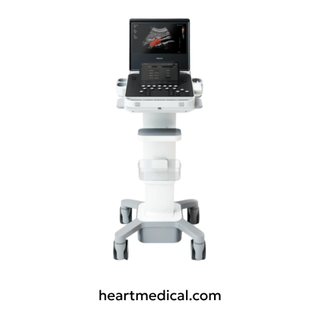
The Philips Compact 5500 is a compact cardiovascular ultrasound system that combines the imaging technology of Philips's flagship EPIQ CVx and Affiniti CVx platforms in a portable console designed for cardiology practices, hospital echocardiography labs, and mobile echo programs. Advanced cardiac capabilities — AutoStrain LV, Automated Ejection Fraction, stress echo protocols, and TEE support — in a system that weighs about 23 pounds and fits environments where a full cart cannot.
This buyer's guide covers what the Compact 5500 does, which practices it fits, how it compares to the full-cart Philips systems and to handheld point-of-care ultrasound, what to look for beyond the console itself, lifecycle planning, and how to think about pricing.
Why cardiology programs are looking at the Compact 5500
A cardiology practice needs to expand echocardiography capacity — but adding another full-cart Affiniti CVx isn't in the budget this year. A hospital cardiology department runs a mobile stress echo program across three satellite clinics, and the current system is too heavy to move reliably. A community cardiologist wants to offer AutoStrain LV and automated ejection-fraction quantification to their patients without committing to a top-tier console.
Different practices. Different budgets. One recurring problem: advanced cardiac imaging capabilities that used to require a full-cart system, now needed in more places than a full-cart system can go.
The Philips Compact 5500 is Philips's answer to that gap — a mid-tier cardiovascular ultrasound system that delivers Philips's imaging technology, quantification tools, and workflow automation in a form factor that moves. This is a guide for anyone considering a Compact 5500 purchase: cardiology practice owners, hospital echocardiography lab directors, cardiologists building mobile programs, biomedical engineering leads, and procurement officers.
Quick answer
Is the Compact 5500 right for your practice?
The Compact 5500 is a fit for cardiology practices, hospital cardiology departments, echocardiography labs, and mobile cardiology programs that need full 2D/3D/Doppler imaging, AutoStrain LV quantification, TEE compatibility, and integration with the Philips EPIQ CVx / Affiniti CVx ecosystem — but in a form factor that can move between rooms, clinics, or facilities.
Especially strong when you need: advanced cardiac quantification without full-cart footprint · mobile or satellite echo across multiple sites · TEE support in a compact console · integration with existing Philips ultrasound investments · battery-operated imaging for mobile environments.
Best for: cardiology practices · hospital echocardiography labs · mobile cardiology programs · satellite/outreach clinics · community cardiology · echo lab overflow · biomedical engineering-supported cardiovascular fleets
Ready to talk Compact 5500 configuration?
We can walk through probe combinations, TEE scope, integration with existing EPIQ CVx or Affiniti CVx workflows, and service coverage in one conversation.
Request a Compact 5500 quote →What is the Philips Compact 5500?

The Philips Compact 5500 is a cart-based, portable cardiovascular ultrasound system that combines Philips's advanced imaging technology with a compact console weighing approximately 10.57 kg (23.3 lb). It runs on a mobile cart with a 15.6-inch HD display and a 10-inch waterproof touchscreen panel — offering the imaging capabilities of a full-cart system in a mobile form factor.
Where a traditional cart-based echocardiography system is a fixed-room investment, the Compact 5500 is designed to move: between rooms in a hospital, between satellite clinics in a network, or between hospital and outreach locations for mobile cardiology programs.
The console itself is powered by Philips's imaging technology, delivering 34% greater image resolution compared with prior-generation Philips compact cardiovascular ultrasound systems, per Philips product documentation. Its architecture is designed for full echocardiography — not just point-of-care assessment — which distinguishes it from handheld or app-based portable ultrasound devices.
Compact 5500 at a glance
|
23 lb Console weight |
3 hrs Battery life |
3 ports Active probes |
15.6″ HD display |
34% Greater resolution |
What comes in a typical Compact 5500 system:
- Compact ultrasound console (10.57 kg)
- Mobile cart with 4 locking swivel wheels, integrated keyboard drawer, up to 4 probe holders, 3 storage bins
- 15.6" HD LCD monitor (1920×1080)
- 10" waterproof touchscreen control panel
- One or more transducer probes (S4-2, V6-2 TEE, C5-1)
- Extended battery (up to 3 hours of continuous imaging)
- Ethernet + 2 USB 3.0 + AUX DisplayPort connectivity
- Wireless connectivity for data transfer
- Full DICOM support
Key clinical capabilities
The Compact 5500 delivers a set of cardiac imaging capabilities that positions it distinctly from both point-of-care ultrasound and top-tier cart-based systems.
AutoStrain LV. Automated 2D strain quantification for left ventricular function. Provides reproducible, fast strain analysis that used to require significantly larger consoles or dedicated software packages.
Automated Ejection Fraction (Auto EF). AI-assisted left ventricular function analysis. Reduces manual measurement time and improves inter-operator reproducibility.
Stress Echo protocols. Full stress echocardiography workflow support — protocol setup, image capture at each stress stage, and comparison views for interpretation.
Tissue Velocity Imaging (TVI) and Tissue Doppler Imaging. Myocardial assessment for advanced cardiac diagnostics.
Automatic View Recognition. AI-based identification of standard cardiac views for precise visualization and analysis.
iScan intelligent scanning. One-touch optimization for 2D imaging and pulse-wave Doppler — a workflow efficiency feature that meaningfully compresses exam time.
Advanced Cardiac Quantification. Detailed left ventricular function assessment tools comparable to what full-cart systems provide.
Philips Ultrasound Collaboration Live. Real-time remote consultation and collaboration — an experienced sonographer or reading physician can guide a scan from anywhere, or review images in real time.
Seamless integration with Philips EPIQ CVx and Affiniti CVx. For programs already invested in the Philips cardiology ecosystem, the Compact 5500 fits into the same workflow, reporting, and image-management infrastructure.
The three probe options
The Compact 5500 supports three primary transducer options, each covering distinct cardiovascular imaging needs. Choosing the right combination is one of the most important buying decisions.
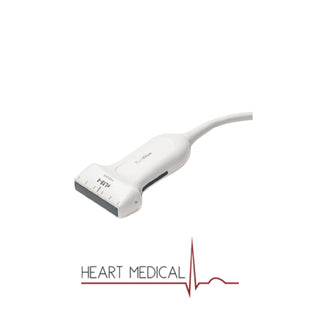
Philips S4-2 — Phased array (cardiac & general imaging)
- Clinical uses: Adult and pediatric cardiac imaging, general 2D and Doppler cardiac imaging, stress echo protocols, comprehensive cardiac assessments
- Why it matters: This is the workhorse probe for cardiology. If your program focuses on transthoracic echo (TTE), stress echo, or cardiac assessments in a general or specialty cardiology setting, the S4-2 is essential.
Philips V6-2 — Transesophageal (TEE) probe
- Clinical uses: Transesophageal echocardiography, cardiac visualization when transthoracic views are limited, intra-operative and peri-procedural imaging
- Why it matters: TEE support is what separates the Compact 5500 from many compact competitors. If your program includes TEE — for pre-cardioversion assessment, structural heart evaluation, or peri-procedural imaging — this probe unlocks that workflow.
Philips C5-1 — Convex array
- Clinical uses: Abdominal imaging, OB/GYN, vascular imaging, peripheral artery and vein studies, general 2D imaging
- Why it matters: Broadens the Compact 5500 beyond cardiac-only. If your program does peripheral vascular assessment, DVT screening, or general abdominal imaging alongside cardiology, this probe adds meaningful scope.
The system has three active probe ports, so you can have multiple probes connected simultaneously and switch between them without unplugging — critical in fast-paced echo lab workflows.
Clinical applications across program types
The Compact 5500 is designed as a full cardiovascular ultrasound system. Here's how it maps to common program types:
Full-service cardiology practices
- Complete adult transthoracic echocardiography (TTE)
- Pediatric echocardiography
- Stress echo (exercise and pharmacologic protocols)
- Vascular imaging (peripheral, cerebrovascular)
- Automated cardiac quantification (AutoStrain LV, Auto EF)
Hospital echocardiography labs
- Echo lab overflow capacity when the primary EPIQ CVx / Affiniti CVx is scheduled out
- Bedside echo in ICU, CCU, or ED environments where a full-cart system doesn't fit
- Post-procedure evaluation and follow-up imaging
- Portable stress echo capability
Mobile / satellite cardiology programs
- Multi-site echo delivery from a central cardiology practice
- Rural outreach programs bringing specialty cardiac imaging to underserved communities
- Home-visit programs for homebound cardiac patients
- Multi-clinic networks where a shared system moves between locations
Community cardiology practices
- First-time investment in advanced quantification without committing to a full cart
- Expansion of imaging capacity as patient volume grows
- Path to Philips ecosystem for practices planning eventual EPIQ CVx / Affiniti CVx investment
Emergency & point-of-care cardiology
- FAST scanning, lung ultrasound, and cardiac tamponade assessment when a compact console is preferable to a handheld
- Peri-procedural bedside echo
Training and academic programs
- Fellowship and residency training in echocardiography
- Simulation-lab support for procedural training
- Faculty demonstration and image-review environments
Compact 5500 vs Affiniti CVx vs EPIQ CVx — how the tiers compare
Any cardiology program evaluating the Compact 5500 is usually also considering the next tier up (the Affiniti CVx or EPIQ CVx cart-based systems) and, in some cases, the tier below (handheld point-of-care ultrasound like the Philips Lumify). The choice comes down to what your program needs to image, where it needs to image, and how much you're willing to invest in fixed infrastructure.
| Feature | Handheld POCUS | Compact 5500 | Affiniti CVx | EPIQ CVx |
|---|---|---|---|---|
| Form factor | Tablet / probe-only | Compact console + mobile cart | Full cart | Full cart |
| Console weight | < 2 lb | ~23 lb | Full cart | Full cart |
| Portability | Highly portable | Room-to-room, clinic-to-clinic | Fixed room | Fixed room |
| Advanced 2D imaging | Basic | Full | Full | Full (top tier) |
| Doppler / spectral | Basic | Full | Full | Full |
| AutoStrain LV | — | ✓ | ✓ | ✓ |
| Automated Ejection Fraction | — | ✓ | ✓ | ✓ |
| Stress echo protocols | — | ✓ | ✓ | ✓ |
| TEE support | — | ✓ (V6-2 probe) | ✓ | ✓ |
| 3D / 4D imaging | — | 2D/3D | 2D/3D | 2D/3D/4D (advanced) |
| Structural heart imaging | — | Standard | Enhanced | Advanced (specialized) |
| Integration w/ EPIQ CVx / Affiniti CVx workflows | Limited | Full | Native | Native |
| Ideal for | Bedside POCUS, ED/ICU, POCUS programs | Mobile echo, satellite clinics, community cardiology, echo lab overflow | Full-service cardiology, hospital echo labs | Structural heart programs, top-tier academic labs |
Feature availability reflected against Philips product documentation as of publication. For the most current specifications and configuration options, request a scoped quote or verify with Philips.
Compact 5500 vs Affiniti CVx
The Affiniti CVx is Philips's mid-to-upper-tier cart-based cardiovascular ultrasound system — a fixed-room console with a broader feature set than the Compact 5500 and a larger footprint. Both share core Philips imaging technology, AutoStrain LV, Auto EF, and stress echo capabilities.
Choose the Compact 5500 when your program needs to move between rooms or clinics, when you're expanding echo capacity without room to install another cart, or when the incremental advanced quantification and structural-heart features of the Affiniti CVx aren't required by your case mix.
Choose the Affiniti CVx when the system will stay in a dedicated echo room, when your program requires the broader advanced quantification suite, and when the console footprint isn't a constraint.
Compact 5500 vs EPIQ CVx
The EPIQ CVx is Philips's top-tier cardiovascular ultrasound system — the flagship for structural heart imaging, advanced 4D volume imaging, and academic-grade cardiac quantification. It's the reference platform for programs at the highest end of cardiovascular imaging.
Choose the Compact 5500 when you need Philips-grade cardiac imaging but not the structural-heart specialization or 4D volume imaging tier the EPIQ CVx provides — and you value the mobility and lower price point.
Choose the EPIQ CVx when your program is a structural heart center, when you're building or running a top-tier academic echo lab, or when you need advanced 4D volume imaging for complex cardiac assessment.
Compact 5500 vs handheld POCUS
Handheld cardiovascular POCUS systems like the Philips Lumify are excellent for bedside assessment, ED/ICU workflows, and point-of-care imaging. They are not a replacement for full echocardiography.
Choose handheld POCUS when your use case is bedside cardiac assessment, ED/ICU workflows, or a POCUS program supplementing a separate echo lab.
Choose the Compact 5500 when your program needs full echocardiography capability — including stress echo, TEE, AutoStrain LV, and integration with formal echo lab reporting workflows — in a form factor that still moves between rooms or clinics.
Who should not buy the Compact 5500
The Compact 5500 is designed for a specific tier of clinical use. It may not be the right primary system for:
- Structural heart imaging centers. Programs specializing in complex structural heart procedures — TAVR planning, mitral valve interventions, advanced congenital cases — will typically need the EPIQ CVx's structural-heart imaging capabilities.
- Advanced pediatric cardiac centers. Programs performing complex pediatric structural cardiac imaging or fetal cardiology at the academic-referral level will typically pair the Compact 5500 with an EPIQ CVx rather than rely on it alone.
- High-volume tertiary academic echo labs. For dedicated echo labs performing top-tier academic research or the highest volume of advanced quantification, a full-tier EPIQ CVx remains the appropriate primary system.
- Point-of-care-only programs. If your workflow is truly bedside-only — no formal echocardiography, no stress echo, no TEE — a handheld system like the Philips Lumify may be the better fit.
For programs in these categories, the Compact 5500 can still be valuable as a secondary or overflow system alongside a higher-tier console — but it shouldn't be the flagship.
What to look for beyond the device
The Compact 5500 console is only part of the purchase. Buyers who avoid buyer's remorse plan for the surrounding infrastructure from day one.
Probe combinations. The system supports three simultaneous probes. For most cardiology programs, the S4-2 (cardiac) is essential. The V6-2 TEE probe is a program decision — highly valuable if your workflow includes TEE, unnecessary if not. The C5-1 (convex) extends the system to abdominal and vascular imaging.
PACS and DICOM integration. The Compact 5500 exports DICOM to enterprise PACS systems. For hospital-based programs, verify that your PACS accepts DICOM from the Compact 5500 and that IT can configure the routing. For practices without PACS, the on-board patient archive stores images and measurements locally.
Integration with existing Philips systems. If your program already has Philips EPIQ CVx, Affiniti CVx, or other Philips ultrasound systems, the Compact 5500 slots into the same workflow, reporting, and image-management infrastructure. Confirm that report templates, measurement protocols, and archiving structures align.
Service contract. Cardiovascular ultrasound is more service-intensive than point-of-care devices. Consider preventive maintenance intervals, probe replacement cycles, and manufacturer-certified service coverage from purchase.
Training. Even experienced sonographers benefit from Compact 5500-specific training on iScan optimization, AutoStrain LV interpretation, and the touchscreen control panel workflow. Plan for either manufacturer-provided training, in-house super-user training, or a formal echocardiography training program for new staff.
Software licensing and updates. Philips releases software updates that expand imaging capabilities and workflow features over time. Software licensing and update paths should be part of the initial purchase conversation.
Cleaning and infection control. The Compact 5500 has a sealed, waterproof touchscreen and control panel designed for enhanced cleanability. Confirm cleaning protocol compliance with your infection control team, and stock appropriate hospital-approved disinfectants and ultrasound cleaning supplies.
Warranty. The Compact 5500 comes with Philips's manufacturer warranty when purchased through an authorized distributor. Extended service contracts are available. For hospital-based programs, verify warranty coverage before purchase — 3rd-party-purchased systems often carry no manufacturer warranty at all.
Certified vs 3rd-party: why authorized distribution matters
The Compact 5500 is part of the Philips ultrasound line. Heart Medical is an authorized Philips distributor for the cardiology and cardiovascular ultrasound line, including the Compact 5500. This is not a marketing distinction — it directly affects what you receive with your purchase.
When you buy the Compact 5500 through an authorized distributor:
- Manufacturer warranty applies from day one
- OEM probes and parts — you receive Philips-manufactured probes to Philips specifications
- Certified service technicians are available for repairs and support
- Software licensing transfers cleanly and remains eligible for updates
- Training resources from Philips are available
- Regulatory documentation — service history, calibration records, compliance certificates — is provided
When you buy the Compact 5500 through a 3rd-party channel or a broker:
- The manufacturer warranty may be void
- Probes may be counterfeit, gray-market, or older units resold as new
- Software licensing may not activate or may not receive updates
- Service and training support may be unavailable
For a system as central to cardiac diagnostics as the Compact 5500, the authorized-distributor premium is not a cost — it's insurance. For a deeper dive on this topic, see our companion piece: Factory-Certified vs 3rd-Party Medical Equipment: Why the Label Matters →
Compact 5500 lifecycle: what to expect over 7–10 years
Cardiovascular ultrasound is a capital purchase with a long service life. Planning for the full lifecycle before you buy helps avoid mid-life surprises.
Expected clinical service life. With proper maintenance, cardiovascular ultrasound systems in the Compact 5500's tier typically remain in clinical service for 7–10 years — a range consistent with industry expectations for cart-based and compact console cardiovascular ultrasound. Actual service life varies based on usage volume, imaging environment, and maintenance discipline.
Probe replacement cycles. Probes wear at a different rate than the console. High-volume programs may replace transducers on a 3–5 year cycle; lower-volume programs may not need replacements until well into the second half of the console's service life. Budget for at least one probe replacement across the 7–10 year lifecycle.
Preventive maintenance. Annual preventive maintenance visits from a manufacturer-certified technician are the baseline. For hospital-scale programs with uptime commitments, semi-annual PM is more common.
Software updates. Philips releases software updates that expand imaging capabilities and workflow features over the system's lifecycle. Confirm your purchase includes software update rights (or an update package) so you don't hit the second half of the lifecycle stuck on an older release.
Resale considerations. Compact 5500 systems retain resale value more predictably when sold with documented service history, original OEM probes, and current software. If long-term resale is part of your capital planning, ask your account manager how to structure the purchase to maximize resale.
Refresh planning. Around year 7, plan for either a service contract extension, a probe refresh, or a full system refresh conversation. The Compact 5500 typically continues delivering full clinical capability well beyond the 7-year mark, but capital planning cycles benefit from the early conversation.
How much does a Philips Compact 5500 cost?
A complete Compact 5500 system typically costs meaningfully less than a full EPIQ CVx or Affiniti CVx while delivering many of the same core cardiac imaging capabilities. Pricing varies significantly based on configuration, which is why we scope every Compact 5500 conversation to your specific program before quoting.
Typical line items in a Compact 5500 purchase:
- The Compact 5500 console and mobile cart
- Probe(s) — S4-2 (cardiac), V6-2 (TEE, if TEE is in scope), C5-1 (abdominal/vascular, if scope includes)
- Software and licensing (base + advanced quantification packages)
- Extended battery configuration
- Extended warranty / service contract
- PACS integration and DICOM configuration
- Initial training program (sonographers + physicians)
- Ongoing training refresh (biannual recommended)
Configuration factors that drive pricing:
- Probe combination (one, two, or three probes; adding the V6-2 TEE probe is the most meaningful step-up)
- Software package tier (base vs. advanced quantification — AutoStrain LV, Auto EF)
- Service contract scope (standard vs. extended coverage)
- Volume — multi-unit and hospital-scale deployments qualify for volume pricing
Total cost of ownership components to plan for:
- Initial capital purchase (console + probes + configuration)
- Software licensing (base package + optional advanced quantification)
- Installation and PACS configuration (typically quoted separately — hourly rate plus travel where applicable, per Heart Medical's terms of sale)
- Initial sonographer and physician training
- Ongoing training refresh (biannual recommended)
- Annual or semi-annual preventive maintenance
- Probe replacement (typically at least once across a 7–10 year lifecycle)
- Software updates through the manufacturer's official channel
- Extended service contract (recommended for hospital-scale programs with uptime commitments)
Financing. Heart Medical offers financing options for qualified buyers, including lease-to-own and multi-year payment structures. For hospital or multi-clinic buyers on GPO contracts, purchases through Heart Medical typically count toward GPO contract credit on eligible agreements — confirm your specific GPO before ordering.
Because the configuration range is broad, the fastest path to a real budget number is a scoped quote. Request a quote with details on your program, or call +1 (833) 409-4600 and Isaac Cross or an assigned Account Manager will walk through configuration and pricing.
How Heart Medical supports Compact 5500 buyers
Heart Medical is an authorized Philips distributor for the cardiology and cardiovascular ultrasound line, including the Compact 5500. We work with cardiology practices, hospital cardiology departments, echocardiography lab directors, mobile cardiology programs, and biomedical engineering teams. Our role isn't to push a specific configuration — it's to help you scope the right system for your actual clinical workflow.
What you get through Heart Medical
|
Authorized Philips distributor — warranty and OEM parts from day one |
Scoped Configuration walkthrough before quoting — probes, service, integration |
Connected Integration with existing EPIQ CVx / Affiniti CVx workflows |
Supported US-based service network — certified technicians, ongoing coverage |
A few specific ways we help:
- Configuration scoping. Whether you're building a mobile echo program, adding echo lab capacity, or upgrading an aging system, we walk through probes, software packages, service coverage, and integration requirements before quoting.
- Volume purchasing. Multi-clinic networks, multi-system programs, and hospital-scale deployments get volume pricing and coordinated delivery.
- Integration with existing Philips systems. For programs already using EPIQ CVx or Affiniti CVx, we coordinate PACS routing, report template alignment, and workflow integration.
- Existing Compact 5500 support. If you have Compact 5500 units already in the field and need service, additional probes, software updates, or training refresh, we can support that regardless of where the original units were purchased.
- Service and maintenance planning. For programs with tight uptime requirements, we build service coverage — preventive maintenance schedules, loaner availability, and manufacturer-certified technician response — into the initial purchase.
Geographic note: Heart Medical sells cardiology equipment across the U.S. If you're not sure whether we can support your specific facility or program, contact us or call and we'll confirm.
Scoping a Compact 5500 or echo lab expansion?
We can walk through probe combinations, software packages, integration with existing Philips systems, and service coverage in one conversation.
Request a Compact 5500 quote →Compact 5500 buying checklist
Before you commit to a configuration, work through this checklist:
- ☐ TEE in scope? If yes, the V6-2 probe is essential. If no, you can skip it and save budget.
- ☐ PACS integration required? Confirm your PACS accepts DICOM from the Compact 5500 and that IT can configure routing.
- ☐ Mobile program? Confirm the mobile cart configuration and extended battery are specified for your workflow.
- ☐ Existing Philips EPIQ CVx or Affiniti CVx in the network? Coordinate integration for shared reporting, measurement protocols, and image archiving.
- ☐ Probe combination decided? S4-2 (cardiac) is standard. V6-2 (TEE) and C5-1 (abdominal/vascular) are program-scope decisions.
- ☐ Service contract scope? Standard, extended, or premium — align to your program's uptime requirements.
- ☐ Training plan? Manufacturer training, in-house super-user, or a formal echo training pathway for new staff.
- ☐ Software licensing tier? Base package or advanced quantification (AutoStrain LV, Auto EF).
- ☐ Financing needed? Discuss lease-to-own or multi-year payment options before quoting.
- ☐ GPO contract check? For hospital buyers — confirm your GPO agreement covers the Compact 5500 through Heart Medical.
- ☐ Installation and delivery timeline? Confirm delivery, installation coordination, and any facility-side prerequisites (network, PACS routing, physical location).
- ☐ Lifecycle plan? Budget for biannual training refresh, probe replacement cycles, and eventual system refresh (7–10 year typical lifespan).
If any of the above is unclear, request a scoped quote conversation — Isaac Cross or an assigned Account Manager will walk through each item before you sign a PO.
Frequently Asked Questions
What is the Philips Compact 5500?
The Philips Compact 5500 is a compact, mobile cardiovascular ultrasound system that delivers advanced cardiac imaging capabilities — 2D/3D/Doppler, AutoStrain LV, Auto EF, stress echo, and TEE support — in a console that weighs about 23 pounds and fits on a mobile cart. It's designed for cardiology practices, hospital echocardiography labs, and mobile cardiology programs.
What probes does the Compact 5500 support?
The Compact 5500 supports three primary probe types: the Philips S4-2 (phased array, cardiac and general imaging), the Philips V6-2 (transesophageal TEE probe), and the Philips C5-1 (convex array, abdominal and vascular). The system has three active probe ports, so multiple probes can be connected simultaneously.
Can the Compact 5500 perform stress echo?
Yes. The Compact 5500 includes full stress echo protocol support — exercise and pharmacologic protocols, image capture at each stress stage, and comparison views for interpretation. This is one of the features that distinguishes it from lower-tier portable ultrasound systems.
Does the Compact 5500 do TEE?
Yes, with the Philips V6-2 transesophageal probe. TEE support in a compact console is a meaningful differentiator — not every cardiovascular ultrasound in this tier supports the transesophageal workflow. Confirm TEE compatibility on your shortlist before deciding on a specific compact system.
How does the Compact 5500 compare to the Philips EPIQ CVx and Affiniti CVx?
The Compact 5500 shares core Philips imaging technology and integrates seamlessly with EPIQ CVx and Affiniti CVx workflows, but is a more compact, mobile system at a lower price point. For programs that need advanced structural heart imaging, 4D volume imaging, or the top tier of cardiac quantification, EPIQ CVx or Affiniti CVx may be more appropriate. For programs that need advanced 2D/3D imaging, AutoStrain LV, and TEE in a mobile form factor, the Compact 5500 is often the right choice.
Can the Compact 5500 replace a full cart-based echo system?
For many cardiology programs — including community cardiology, mobile programs, and echo lab overflow — yes. For advanced structural heart programs, complex 4D imaging, and top-tier academic echocardiography labs, a full cart system remains the appropriate choice. Many programs use both.
What is AutoStrain LV, and why does it matter?
AutoStrain LV is Philips's automated 2D strain quantification for left ventricular function. It provides fast, reproducible strain analysis — reducing manual measurement time and improving inter-operator consistency. For cardiology practices and echo labs, this is one of the workflow-transforming features of the system.
Does the Compact 5500 integrate with hospital PACS?
Yes. The Compact 5500 supports DICOM export to enterprise PACS systems. Your IT team will configure the integration; Philips provides documentation and Heart Medical can help coordinate.
What is the battery life of the Compact 5500?
Up to 3 hours of continuous imaging on internal battery, with actual runtime varying by imaging mode (2D, Doppler, stress echo protocols) and usage conditions. Combined with smart standby mode, this makes the system practical for mobile and outreach programs where reliable power access isn't guaranteed.
How long does the Compact 5500 last?
With proper maintenance, cardiovascular ultrasound systems in the Compact 5500's tier typically remain in clinical service for 7–10 years — a range consistent with industry expectations for cart-based and compact console cardiovascular ultrasound. Actual service life varies based on usage volume, maintenance discipline, and probe replacement cycles.
Where should I buy a Philips Compact 5500?
Buy through an authorized Philips distributor to ensure manufacturer warranty, OEM probes and parts, valid software licensing, and access to certified service. Heart Medical is an authorized Philips distributor for the Compact 5500 — request a quote or contact us at +1 (833) 409-4600.
Does the Compact 5500 support remote consultation?
Yes. Philips Ultrasound Collaboration Live enables real-time remote consultation — an experienced sonographer or reading physician can guide a scan from anywhere, or review images live. Especially valuable for mobile programs, satellite clinics, or teaching environments.
About the contributor
Isaac Cross, PharmD
Account Manager, Heart Medical
Isaac began his career as a pharmacist in St. Louis before moving into independent medical sales in late 2020, where he specialized in cardiovascular ultrasound — including a period selling ultrasound for GE HealthCare. He joined Heart Medical in 2025 to broaden his portfolio across both new Philips systems and refurbished cardiovascular imaging, and today advises cardiology practices, hospital cardiology programs, and mobile echo teams on cardiovascular ultrasound purchases.
Reviewed by Heart Medical Clinical Applications Team
Clinical and technical specialists ensuring accuracy and relevance across all Heart Medical content.
Sources
- Philips Compact 5500 CV — official product page — manufacturer specifications and clinical documentation
- Philips authorized-distributor documentation (2026)
- American Society of Echocardiography (ASE) — Guidelines and Standards — including recommendations for cardiac chamber quantification and strain imaging
- American Institute of Ultrasound in Medicine (AIUM) — Practice Parameters — echocardiography practice standards
- American College of Cardiology (ACC) — Guidelines for stress echocardiography
Heart Medical is an authorized distributor of medical equipment and supplies from GE HealthCare, Philips/Heartstream, Siemens Healthineers, and Mindray. For Compact 5500 procurement, echocardiography lab scoping, service on existing units, or extended warranty options, contact us at +1 (833) 409-4600 or info@heartmedical.com.
Reviewed by Heart Medical Clinical Applications Team
Clinical and technical specialists ensuring accuracy and relevance across all Heart Medical content.