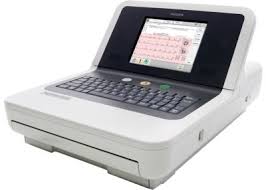
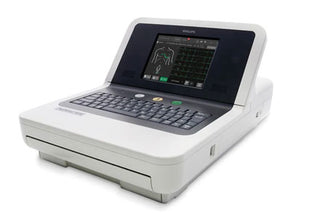
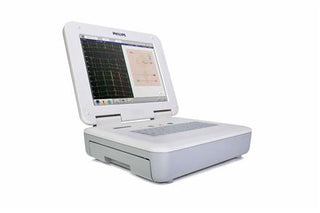
A failing cardiograph cannot predict its timing. It occurs right when the workflow can no longer handle extra pressure.
The repair bill is only a small part of the cost. That is the least of the problem.
What really increases the cost of a failing cardiograph? It’s the delay in ECG tests, the interruption of patient flow, the staff time spent troubleshooting, and the wait for the device to work again. Workarounds start to happen instead of addressing the root cause. Workflow changes, reporting delays, and lack of confidence follow.
Then the device leaves the floor and goes to the bench. The problem escalates from there; logistics, coordination, and downtime become even more significant. You arrange for shipment. You check on the process. You explain the delays to the clinicians.
This is not just a technical nuisance. It is an operational issue.
For biomedical engineering leaders, clinical engineering managers, cardiology operations specialists, and multi-site outpatient clinics, keeping the cardiograph operational is crucial for efficient operations.
Why cardiograph uptime is a leadership issue
Cardiograph uptime has a direct influence on patient flow. If one device fails, the load redistribution starts immediately – the staff redirects patients to other cardiographs and starts queuing their tests. This leads to additional delays.
It has a similar effect on staff productivity. Time that could have been spent on performing a test is being used now for finding the device, checking the connections, rebooting it, or submitting service request forms.
Another related issue in this context is standardization. If different devices use varying software versions and configurations, supporting them becomes harder. Every device will act in its unique way. Troubleshooting and maintenance will be harder and less consistent.
Service response times will change accordingly. In the absence of visibility, teams must wait for failures. With visibility, the maintenance process occurs proactively.
This is the nature of fleet management. It is not about technical support, but about operational efficiency.
The leaders do not oversee a single device. They manage availability and consistency of their entire environment.
Running a Philips PageWriter TC fleet?
A fleet assessment takes about 15 minutes and lays out the ROI for your specific environment.
See the service →What is the actual cost of a cardiograph downtime?
Every downtime event produces multiple cost factors. First and foremost, the ECG acquisition is delayed. This affects not only diagnosis time but also overall clinic schedule since clinicians must perform extra actions to identify and troubleshoot the problem.
Staff is spending its valuable time on such tasks as locating cardiographs and coordinating their work. Devices are redistributed across multiple rooms, which adds extra search efforts. Patients might get rescheduled due to the problem – affecting both satisfaction level and throughput metrics.
Finally, the device might have to move to bench repair. This creates logistical cost factors – the process of packaging, shipping, following up, and arranging new appointments. The cost of rush shipment increases with urgency. Coordinating loaner devices adds another overhead factor since even when a loaner is shipped, it still needs to be set up.
All these factors affect the operational efficiency, even if they do not appear on the repair invoice.

Why reactive failures result in additional cost for the healthcare organization
The reactive maintenance approach does not look at the past history of the problem. It is focused on solving the problem itself. It also prevents from addressing root causes and potential future issues, leaving them unresolved and accumulating overtime.
Some of the most common issues that lead to downtime are minor, but they occur repeatedly and consistently. Examples include a battery issue, version mismatch between devices, or intermittent network connection.
These problems do not immediately trigger a maintenance process, but they cause small operational interruptions. At the fleet scale, these small disruptions produce a measurable impact. And again, all these disruptions are not recorded in the repair bill.
The leaders' focus on these unexpected outages produces additional friction in the workflow.
This friction adds unnecessary complications to the processes, causing a negative impact on operations and increasing dependence on reactive services.
What proactive monitoring catches before the downtime occurs
Proactive monitoring changes the nature of the issue entirely. While with traditional approaches the process is delayed until the cardiograph fails, the proactive approach enables teams to intervene before failure occurs. Specifically, the Philips fleet management dashboard should provide:
- Real-time error notifications – email notifications triggered by cardiograph error codes, providing information that the biomed team can act upon.
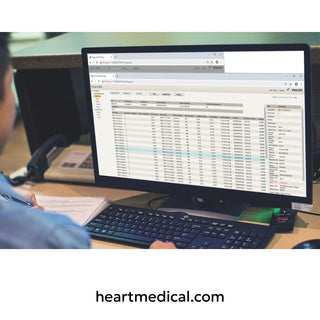
- State-of-health monitoring – live dashboard displaying the health status of each cardiograph device, sortable by location, care area, model, and status.
- Battery and AC power visibility – remote visibility of the status of every cardiograph, including battery and AC status.
- Software version tracking – detecting and resolving version drifts among the cardiograph fleet to ensure consistency.
- Network connectivity verification – detecting network connection issues before using the cardiograph and losing access to its functionality.
- Configuration drift detection – verifying the configurations across the fleet to maintain consistency in workflows.
- Error log visibility and download – accessing the device error logs without having to extract them manually.
The Philips Device Management Dashboard
The Philips Device Management Dashboard was developed as a solution designed to make proactive management and maintenance of cardiograph fleets possible. It is customer-installable, on-premise application accessible from any browser-enabled device connected to the facility network. Hosting resides on a server at the client's facility (Windows Server + SQL Server). Multi-user access is supported to allow for better collaboration.
Notably, this is on-premise solution. All clinical data remain on the client's premises. What is transmitted through the system includes only error logs, software version, battery and AC power status, and other device telemetry.
Capacity & scalability:
- Up to 1,000 device licenses in one instance
- Deployment of multiple Dashboard servers in one site
- License tiers ranging from 50 to 5,000 devices
Hardware & software requirements:
- Windows Server 2012 R2 or higher; SQL Server 2012 R2 Standard Edition or higher
- Intel processor with 4 cores and 3.1 GHz or higher performance
- Minimum 4 GB DRAM, 72 GB disk space
- Disk capacity depends on the license tier (up to 500 GB for 5,000 devices configuration)
Optional integration includes support of SureSigns VS3/VS4 patient monitors, Efficia CM10/CM12/CM100/CM120/CM150 monitors, and EarlyVue VS30 monitors. Thus, a hospital with mixed Philips equipment can manage its cardiographs and vital signs monitors from the same interface.
What remote fleet management changes for the biomedical engineering team
Most of the changes here concern operations. While before remote management was done through physical inspection, now everything occurs on one web-based dashboard. Thus, visibility changes into proactiveness. Problems are detected ahead of time. And as such, the response process transforms significantly.
Surprises transform into proactively handled events. Every notification contains the name of the problematic device, its location and description. Coordination becomes smoother and easier since all the necessary information is available from one place. Prioritization of the devices becomes easier – you can sort them based on location or status. Multi-user access facilitates collaboration. Enterprise-wide scheduling becomes more feasible – you can apply software updates and configuration changes throughout the entire fleet.
Thus, more time is available for performing maintenance and management tasks.
Standardization has its ROI too
While non-standardized devices are harder to operate and troubleshoot, standardized devices produce measurable operational savings. Specifically, you have the following benefits:
- Repeatable troubleshooting process
- Reduced recovery time from a configuration drift or a software failure
- Reduced training time since the devices act similarly
By managing a more standardized fleet, leaders save time and effort required for troubleshooting and maintenance.
What is the difference between downtime cost and subscription cost
The decision about which option is more costly should be evaluated differently. The first option (downtime) introduces variable cost that is harder to estimate. The second (subscription) introduces predictable cost, making future budget planning easier.
Downtime events can be easily avoided using proactive management and maintenance tools. These include, first and foremost, avoiding emergency service events. By detecting a problem ahead of time, the teams can fix it without needing rush shipment and expedited maintenance. Additional downtime cost is saved thanks to decreased number of troubleshooting activities performed by staff. Battery health is known ahead of time, which saves from power issues causing device outage. Configuration backup saves time and effort on rebuilding configuration. Lastly, loaner devices prevent downtime in the case of bench repair.
Why battery visibility and loaner support are important too
The battery health is usually neglected until it becomes a problem.
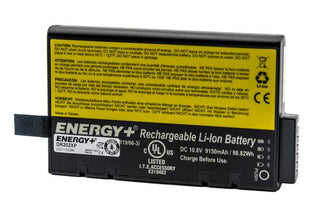
But power failure in mobile devices happens instantly. It is not a degradation problem that can be easily spotted. Therefore, having a remote solution for monitoring batteries can save a lot of operational headaches, allowing the team to address power issues preemptively, rather than reacting to them. This is not a marginal advantage. It directly saves your uptime.
The loaner support also adds another layer of protection for maintaining operational uptime. With a failing device moved to the bench, the immediate loaner device ensures that operations can proceed uninterrupted.
The additional value of Remote EKG Management for Carlsbad area clients
The base Remote EKG Management service offered by Heart Medical is available throughout the entire country. However, Carlsbad area clients have access to two additional benefits, exclusive to their service area:
- Free EKG battery replacement every 3 years, per device, sent to the customer's address
- Immediate loaner cardiograph, replacing the one currently under bench repair, sent to the customer's address immediately
If the battery replacement and loaner device perks are important and you are located outside Carlsbad's network, please reach out to us.
Multi-site operations have even higher ROI from cardiograph remote monitoring
ROI increases with scale. While it is somewhat manageable with a single-site operation, it rapidly becomes unsustainable when a healthcare network is involved.
With a remote management and monitoring system, multi-site environment receives a lot of added value, including the following aspects:
- Centralized visibility into multiple sites at once
- Location-based sorting of the device list, which allows for immediate detection and troubleshooting of issues
- Software control in enterprise-scale – software updates and configuration changes applied to the fleet
- Better escalation and faster response since all needed information is always at hand
Thus, in addition to standard advantages of remote management, multi-site operations receive several specific ones, which increase ROI significantly.

On the relationship of remote and secure
When mentioning the term "remote," it is crucial to note what it actually entails.
The system uses only on-premises hosting. It resides on the server within the facility network. Web-based access is enabled only for designated and authorized personnel. Clinical data does not leave the facility. None of the patient data is transmitted through the system – the dashboard is solely focused on device status telemetry.
These characteristics of the system facilitate IT and compliance evaluations and reduce potential friction and obstacles during deployment.
Facilities that get maximum ROI value from Remote EKG Management
Of course, the facilities are quite diverse and have different needs. Some of them benefit more from proactive cardiograph fleet management than others. Here is the list of such organizations:
- Facilities with multiple PageWriter cardiographs within the cardiology department
- Outpatient networks with distributed device locations
- Healthcare organizations with lean biomedical engineering teams
- Organizations attempting to minimize their emergency service usage
- Health networks trying to implement cardiology ECG standardization
If you already have operational problems related to uptime issues, the potential value becomes obvious.
The right way to evaluate Remote EKG Management program
There are multiple evaluation criteria that might apply in this case. However, these criteria should reflect the operational needs and priorities. Specifically, consider the following items:
- Current size of the fleet.
- Types of supported devices.
- Patterns and frequency of failures.
- Current capacity of the biomedical engineering team.
- Presence of loaner devices.
- Current frequency of battery replacements.
- Multisite environment.
- On-premises hosting requirements.
This approach allows for assessing the potential value of remote monitoring and management.
Why Remote EKG Management provided by Heart Medical guarantees uptime
The Heart Medical's remote cardiograph management approach combines several key elements to achieve maximum uptime. Namely, it utilizes the Philips Device Management Dashboard, which allows for managing the cardiograph fleets with high efficiency and reliability. The dashboard provides support for multiple Philips PageWriter devices:
- PageWriter TC20, TC30, TC50, TC70 running software version A.07.07 or higher
- Additional support for SureSigns, Efficia, and EarlyVue devices available
The features provided by this solution include:
- Real-time alerts of issues
- Centralized software update
- Configuration backups for reducing recovery time
- Remote monitoring of battery and AC power status
- On-premises hosting
In addition to these features, Carlsbad region's customers get two additional advantages in the form of free EKG battery replacement and immediate loaner cardiograph delivery. To put it briefly:
- Every three years per enrolled device, the hospital receives a free replacement EKG battery shipped to the address of choice.
- Whenever the device is sent for bench repair, the hospital receives an immediate loaner cardiograph at its location.
Notably, both of these perks are exclusively available to customers within the Carlsbad service area. The base subscription is available across the United States.
"Biomedical tech teams shouldn't have to discover the problem of a cardiograph when a clinician reports on it. The data has been there inside the device all along – the dashboard shows it. Our subscription service adds human expertise over that data. For hospitals in our Carlsbad service area, we want cardiograph surprises to disappear." — Jose Cardenas, Chief Technology Officer, Heart Medical
Frequently Asked Questions
What is cardiograph fleet management?
Cardiograph fleet management involves managing, monitoring, and maintaining multiple electrocardiograph devices within one hospital or healthcare network from a single web-based dashboard. It allows the biomedical engineering teams to see the state, configuration, software version, battery status, and error messages of all devices in real time.
What is the Philips Device Management Dashboard?
Philips Device Management Dashboard is customer-installable web-based tool for centralized management and monitoring of compatible Philips ECG devices and patient monitors. It resides on the hospital network and allows for centralized software updates, configuration backups, error logs access, and multi-user access.
What devices are supported by the Remote EKG Management subscription?
Heart Medical's Remote EKG Management service supports Philips PageWriter TC20, TC30, TC50, TC70 cardiographs running software version A.07.07 or higher. Optional support packages include Philips SureSigns VS3/VS4, Efficia CM10/CM12/CM100/CM120/CM150, and EarlyVue VS30 devices.
Will the subscription transmit patient data through the network?
No. Philips Device Management Dashboard is hosted within the hospital network and transmits telemetry-only information, including error logs, software version, battery status, network status, and configuration details. Clinical data remains in the facility and is never transmitted anywhere.
What is included in the Heart Medical Advantage?
For customers within Carlsbad region, the Heart Medical Advantage offers two exclusive perks: free replacement EKG battery every 3 years per enrolled device and immediate loaner cardiograph if the device is currently under bench repair. Note that these perks are exclusively available to local clients.
Is the basic subscription available outside of Carlsbad service area?
Yes. The base Remote EKG Management subscription including the dashboard and Heart Medical's service layer is available throughout the USA. Heart Medical Advantage perks are exclusive to the Carlsbad and greater network service area.
What hosting requirements does the dashboard have?
The dashboard requires the following hardware and software to operate: Windows Server (2012 R2 or newer); SQL Server (2012 R2 Standard Edition or newer), Intel processor (with four cores and 3.1 GHz clock speed); minimum 4 GB DRAM; minimum 72 GB available disk space. The exact capacity of the server is proportional to the license tier used: up to 500 GB for 5,000 devices.
How long does the deployment take?
On average, the deployment takes several days for facilities using compatible cardiograph devices with existing server infrastructure. Depending on the age of the devices, the process might take slightly longer.
Conclusion
Cardiograph uptime is more of an operational problem than a technical one.
The greatest ROI comes not from avoiding a repair bill. The greatest ROI comes from avoiding a downtime event itself.
Every unexpected failure that is prevented translates into time savings. This is where the proactive fleet management delivers ROI.
Ready to talk about your fleet?
Tell us how many cardiographs you have, where they're located, and which models. We'll put together a subscription that fits.
Request a free quote →Related reading from Heart Medical
- How to choose a cardiac ultrasound system: A practical guide for medical buyers — for teams evaluating capital equipment alongside fleet management decisions.
- Florida's Second Chance Act and what it means for EKG screening programs — how regulation is reshaping cardiac screening requirements.
- Deploying AEDs in public facilities: A field guide for facility managers — broad equipment deployment best practices that complement fleet management.
Sources
- Philips Device Management Dashboard product brochure (February 2023), Philips Medical Systems
- Heart Medical Remote EKG Management product page and subscription terms
Heart Medical is an authorized distributor of medical equipment and supplies from GE HealthCare, Philips, Siemens Healthineers, and Mindray. For Remote EKG Management subscription quotes, fleet assessments, or dashboard infrastructure consultation, contact us at +1 (833) 409-4600 or info@heartmedical.com.
Reviewed by Heart Medical Clinical Applications Team
Clinical and technical specialists ensuring accuracy and relevance across all Heart Medical content.
Related Products