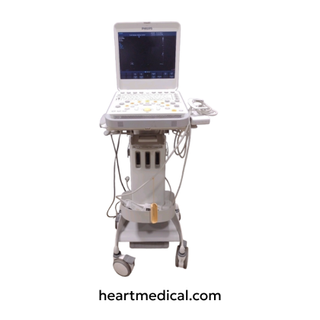
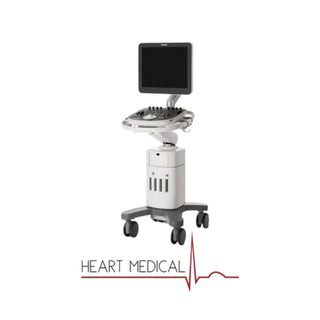
Ultrasound technology continues to evolve, and Philips has been at the front of this progress. The ATL ultrasound platform represents a step forward in image quality, workflow efficiency, and advanced automation tools designed for modern clinical environments.
For healthcare providers, the decision to invest in an ultrasound system is not only about features. It is about reliability, long-term service value, and the ability to meet complex diagnostic demands. The Philips ALT line delivers specialized capabilities for cardiovascular, vascular, and general imaging practices, with measurable improvements in speed, reproducibility, and diagnostic confidence.
This guide has been developed for hospital decision-makers, outpatient clinics, and specialty imaging centers evaluating Philips ultrasound scanners. It is structured to help you understand how ALT systems differ from legacy Philips platforms, what features matter most in clinical workflows, and how these upgrades impact cost of ownership.
Whether you are considering a new purchase, an upgrade, or a refurbished Philips system, this guide provides the insights needed to make a confident and well-informed decision.
Philips Ultrasound Portfolio: Context & How “ALT/ATL” Fits
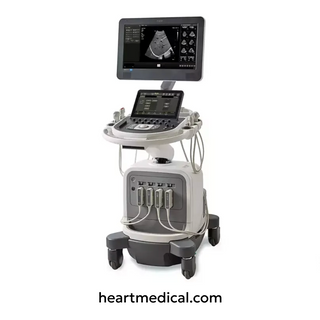
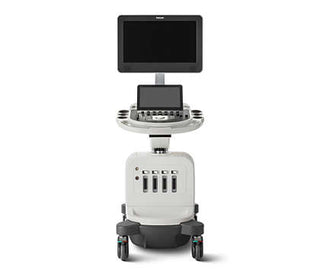
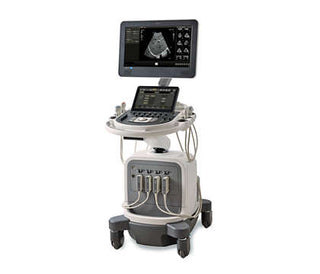
Philips portfolio today. Philips spans premium cart systems, compact carts, and handhelds. Core families include EPIQ (premium), Affiniti (upper-mid), Compact 5500/5300 (portable), and Lumify (handheld). These platforms share architecture, AI-assisted workflow, and transducer ecosystems.
What buyers often mean by “ALT.” In many searches, “ALT” is used when buyers mean ATL (Advanced Technology Laboratories). It is an ultrasound brand that Philips acquired years ago. Common legacy units are ATL/HDI series (e.g., HDI 5000). These systems are now legacy/refurb only; parts and modules remain available through third-party channels. If you are comparing “Philips ALT” to current models, you are likely evaluating ATL/HDI versus modern EPIQ/Affiniti/Compact platforms.
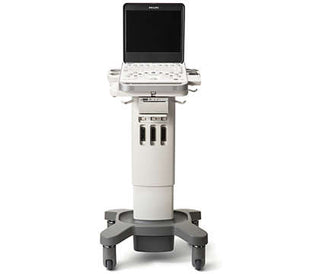
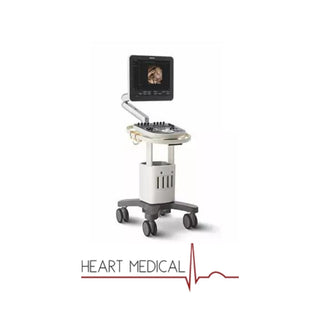
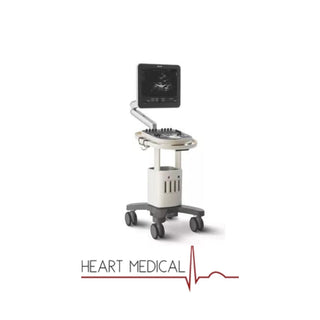
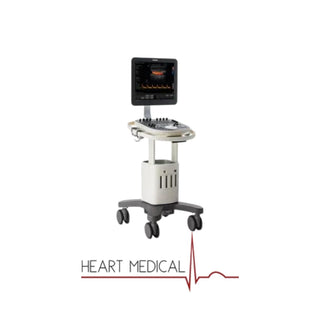
Where Heart Medical sits. Heart Medical’s Philips collection includes models such as iE33, CX50, ClearVue 350, and others sold new, demo, or refurbished. This catalog is a practical cross-section of what U.S. clinics buy today and what many ATL/HDI owners upgrade into.
2025 upgrades to know. Philips released AI-assisted Elevate enhancements for EPIQ Elite and Affiniti (faster exams, new quantitative tools). Cardiovascular lines also saw Transcend Plus updates for EPIQ CVx and Affiniti CVx. If you are moving from ATL/HDI, factor these software advantages into TCO and throughput modeling.
Transducer ecosystem. Philips maintains a wide probe portfolio across clinical segments. xMATRIX and modern cardiac/vascular transducers deliver volume imaging, flow tools, and reproducible quantification, core gains versus ATL/HDI.
Portfolio Snapshot (ALT/ATL context included)
| Family / Model | Clinical Focus | ALT/ATL (Legacy) Relation | Notable Capabilities (Examples) | Typical Use Cases |
|---|---|---|---|---|
| EPIQ Elite / EPIQ CVx | Premium shared service & cardiovascular | Modern successor class vs ATL/HDI; major leap in processing, AI workflow, and probe tech | xMATRIX volume imaging; integrated AI; advanced quantification; Elevate software enhancements (2025) | High-throughput echo labs, tertiary hospitals, research-grade imaging |
| Affiniti (e.g., 50/70, CVx) | Upper-mid shared service & CV | Upgrade path for ATL/HDI users who need modern AI and better workflow at lower cost than EPIQ | Streamlined workflow; reproducible imaging; Elevate presets/quant tools (2025) | Community hospitals, multi-specialty clinics, vascular labs |
| Compact 5500 CV / 5500 Series | Premium portable (cardiovascular or general) | Portable alternative to replace aging ATL carts where mobility is required | Cart-like image quality in a compact chassis; robust battery/mobility; cardio toolset | Bedside echo, satellite clinics, ER/ICU point-of-care |
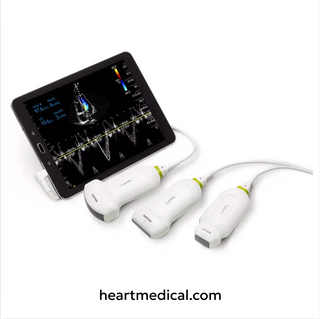
| Lumify (Handheld) | Handheld POCUS | Not comparable to ATL/HDI carts; complements modern fleets for triage and quick checks | Android/iOS connectivity; rapid deployment; curated presets | Urgent care, EMS, primary care, procedure guidance |
| ATL / HDI 5000 (Legacy) | Legacy shared service | What many buyers mean by “ALT.” Now legacy/refurb; parts and boards still in circulation | Baseline 2D/Doppler era architecture; limited AI/workflow vs modern Philips | Sites maintaining legacy fleets; budget-limited environments planning phased upgrades |
| iE33 / ClearVue / CX50 (as seen at Heart Medical) | Cardio (iE33), general/WH (ClearVue), portable shared service (CX50) | Transitional families many ATL/HDI owners moved into; still widely used/refurb | Solid image quality, mature probe support; bridge between ATL/HDI and EPIQ/Affiniti generations | Hospitals and clinics expanding services without premium EPIQ pricing |
What this means for buyers transitioning from “ALT/ATL”
- If your current system is ATL/HDI, plan for a feature and workflow step-change with EPIQ or Affiniti (AI quantification, xMATRIX, faster acquisition). This reduces repeat scans and improves reproducibility in echo and vascular lines.
- If mobility is the constraint, Compact 5500CV provides cart-like cardio performance in a portable chassis, often a cleaner operational fit than extending ATL/HDI life with parts.
- For triage and bedside checks, add Lumify but avoid replacing a cart class if you run a diagnostic echo service, Lumify is complementary, not a 1:1 replacement.
Key Features & Capabilities of ALT Ultrasound Scanners
Philips ALT (often ATL legacy) and modern Philips systems differ greatly in imaging, automation, and clinical throughput. Below are the defining features that matter for clinics and hospitals evaluating upgrades.
Imaging & Visualization
- 2D / 3D / 4D imaging: Modern Philips systems deliver high-frame-rate 3D/4D cardiac and OB/GYN imaging, beyond the 2D baseline of ATL/HDI units.
- Doppler modes: Advanced color, pulsed, and continuous wave Doppler with superior sensitivity compared to legacy systems.
- Elastography: Shear wave and strain elastography (ElastQ, Auto ElastQ) provide reproducible stiffness assessments for liver and vascular applications.
Automation & AI Tools
- AI-assisted quantification: Automated EF, volume, and strain measurements reduce operator variability.
- Workflow acceleration: Preset loading, automated border detection, and image optimization cut exam times significantly.
- HeartModel / Auto Color Flow Quantification: Improves reproducibility in cardiology and vascular labs.
Transducer & Hardware Ecosystem
- Probe range: xMATRIX, TEE, curvilinear, and high-frequency linear probes support cross-discipline imaging.
- Ergonomics: Floating control panels, anti-glare monitors, and compact chassis improve operator comfort.
- Connectivity: Modern systems integrate with PACS, HIS, and DICOM workflows—absent in legacy ATL.
Software & Upgrade Paths
- Elevate 2025 release (for EPIQ and Affiniti): Adds faster AI workflows and new quantitative tools.
- Transcend Plus for CVx: Enhances cardiovascular throughput.
- Legacy support: ATL/HDI systems are limited to hardware parts; no AI/quantification upgrades.
ATL vs Modern Philips Systems
| Aspect | Philips ALT / ATL HDI (Legacy) | Modern Philips (EPIQ, Affiniti, Compact) |
|---|---|---|
| Imaging | 2D baseline; basic Doppler | 2D/3D/4D, high-resolution Doppler, elastography |
| Automation | Manual measurement & presets | AI-driven quantification (EF, strain, volumes), automated border detection |
| Workflow | Operator-dependent, slower exams | Elevate AI workflows (2025); faster, reproducible results |
| Probe Compatibility | Conventional probes, limited specialty options | xMATRIX, TEE, wide specialty transducer range |
| Connectivity | Minimal network integration | PACS, HIS, DICOM fully supported |
| Service & Support | No OEM upgrades; parts only via refurb suppliers | Ongoing OEM software updates, service contracts, extended warranty options |
| Cost of Ownership | Low upfront cost, higher downtime risk | Higher upfront, better ROI through throughput & reliability |
Frequently Asked Questions
1. What does “Philips ALT” mean?
Most buyers searching for “ALT” are referring to ATL/HDI legacy ultrasound systems, acquired by Philips. These are now considered end-of-life, with only refurbished units and spare parts available.
2. Can an ATL/HDI system still be used in 2025?
Yes, but with limitations. These systems are functional for basic 2D and Doppler imaging but lack AI, elastography, and modern workflow tools. Service is also limited to third-party suppliers.
3. What advantages do modern Philips scanners have over ALT/HDI?
Modern platforms like EPIQ and Affiniti offer AI-driven quantification, advanced 3D/4D imaging, elastography, and seamless PACS/DICOM integration. These directly improve diagnostic confidence and throughput.
4. Are refurbished Philips systems a safe option?
Refurbished systems (such as iE33, ClearVue, CX50) can be cost-effective when sourced from a reliable vendor. However, buyers must confirm part availability, service contracts, and warranty coverage.
5. What is the best Philips system for cardiology?
For dedicated echo labs, the EPIQ CVx with 3D/4D cardiac imaging and AI quantification provides the most comprehensive capability. The Affiniti CVx offers a balanced option for mid-sized clinics.
Conclusion
Philips ALT/ATL ultrasound scanners served the industry well for decades, but today’s clinical demands require faster workflows, reproducible imaging, and advanced quantification tools. Upgrading to EPIQ, Affiniti, or Compact 5500CV ensures your clinic can handle complex cases with confidence, while also reducing downtime and long-term service risk.
For hospitals and imaging centers, the choice is no longer between old and new technology. It is between short-term savings with higher risks versus sustainable investment with measurable ROI.
At Heart Medical, we supply a complete range of Philips ultrasound systems — from refurbished transitional models to the latest EPIQ and Affiniti platforms. Every unit is backed by expert support, probe compatibility guidance, and service options tailored to your facility’s needs.
Explore our Philips ultrasound collection: Heart Medical – Philips Ultrasounds
Reviewed by Heart Medical Clinical Applications Team
Clinical and technical specialists ensuring accuracy and relevance across all Heart Medical content.
Related Products