Florida just became the first state in the nation to require electrocardiogram (EKG) screenings for high school athletes. Beginning with the 2026–2027 school year, every student in grades 9–12 who participates in athletic competition will need an EKG on file. The requirement is part of the Second Chance Act, signed into law by Governor Ron DeSantis, and it changes how athletic programs, pediatric cardiology practices, and school nurses approach pre-participation cardiac screening.
For athletic programs, screening clinics, and the schools that have to coordinate compliance, the next eighteen months will involve real operational work — choosing equipment, partnering with qualified clinicians, and getting systems in place before the first competition next fall. Below is a practical guide to what the law requires, why it matters medically, and what the equipment side of preparation actually looks like.
What the Second Chance Act actually requires
The core of the law is straightforward. Beginning with the 2026–2027 school year:
- Students in grades 9–12 must have an EKG screening before participating in their first interscholastic athletic competition.
- The screening must follow standards set by the Florida High School Athletic Association's Sports Medicine Advisory Committee (FHSAA SMAC).
- Any EKG performed within two years prior to the start of the 2026–2027 school year counts toward the requirement, which gives families some flexibility on timing.
- The screening is required once per athlete during their high school career, unless updated guidance is issued.
Worth noting: the law does not require schools to perform the EKGs themselves. The screening can be completed at a pediatric cardiology practice, a sports medicine clinic, a primary care office equipped to perform and interpret an EKG, or through an organized school-based screening event with qualified clinicians on site. Most athletic programs will partner with local clinics and pediatric cardiology practices to coordinate the screenings rather than building in-house capacity.
Why EKG screening matters: the medical case
Sudden cardiac arrest is the leading medical cause of death in young athletes. Conditions like hypertrophic cardiomyopathy, long QT syndrome, arrhythmogenic right ventricular cardiomyopathy, and Wolff-Parkinson-White syndrome are often asymptomatic — meaning the first sign an athlete has the condition can be a cardiac event during practice or competition.
Dr. Jamie Decker, director of electrophysiology at Johns Hopkins All Children's Hospital, made the case directly in his recent interview with Fox 13 News: "You can have a totally abnormal ECG and never know it because you don't have any symptoms. And the first symptom may be a sudden cardiac arrest as a symptom, as a first symptom."
A standard history-and-physical exam — the traditional pre-participation screening — catches some cardiac risk factors but is known to miss the silent electrical and structural abnormalities that an EKG can detect. Adding the EKG to the screening process meaningfully increases the chance of identifying at-risk athletes before they take the field.
The screening is not a guarantee. EKGs have a known false-positive rate, and not every cardiac condition shows on a resting EKG. But across the medical literature, mandatory EKG screening for young athletes has been associated with measurable reductions in sudden cardiac death — and that's the evidence base the Florida legislature was working from when it passed the law.

The companion law: HB 1607 and AEDs in every Florida school
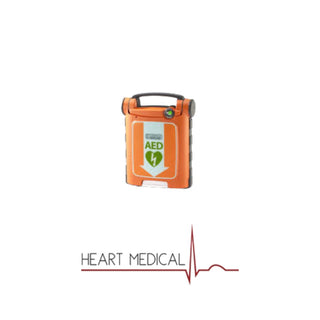
The Second Chance Act doesn't stand alone. It pairs with House Bill 1607, passed the prior year, which requires every public and charter school in Florida to have at least one automated external defibrillator (AED) on school grounds by July 1, 2027.
Read together, the two laws create a connected safety net: the EKG screening aims to identify at-risk athletes before a cardiac event happens, and the AED requirement ensures that when an event does occur — whether to an athlete, a student, a teacher, or a visitor — a school has the equipment on hand to respond.
The AED requirement is paired with training expectations. As Dr. Decker noted in the same interview, the protocol isn't just having the AED — it's recognition of sudden cardiac arrest, prompt CPR, and AED application "within three minutes of the arrest for best outcomes." That means teachers, coaches, athletic trainers, and school nurses all need familiarity with the equipment.
For schools and athletic programs, the practical reality is that the two laws together set a deadline: by the start of the 2026–2027 school year, your athletes need cleared EKGs, and by July 2027, your campus needs at least one AED with trained staff. Most administrators will want to handle both pieces in the same procurement and training cycle rather than treating them separately.
Preparing for both deadlines?
We can help you configure the right EKG setup and AED plan in one conversation — before the fall rush.
Talk to our team →Equipment standards: what to look for
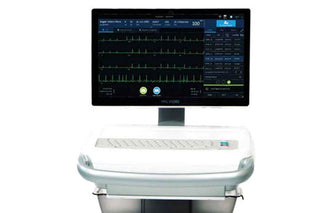
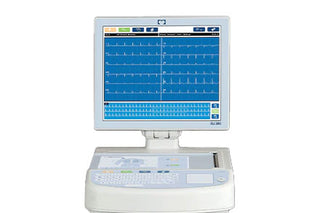
Whether you're an athletic program coordinating with a partner clinic or a pediatric cardiology practice taking on additional screening volume, the equipment standards matter. A few things to consider (see also: our guide to top EKG machines for clinical settings):
For the EKG screening side:
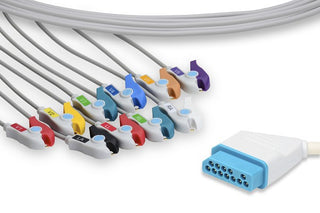
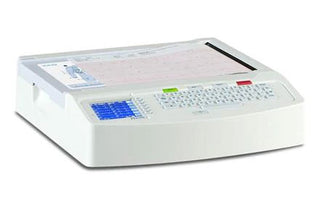
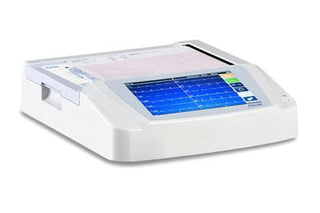
- 12-lead resting EKG capability is the standard for cardiac pre-participation screening. Anything less than 12-lead does not meet the diagnostic threshold the FHSAA Sports Medicine Advisory Committee will likely set.
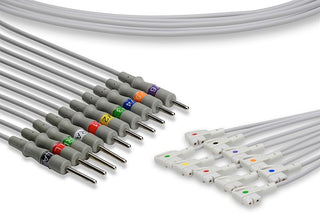
- Pediatric-appropriate electrodes matter — adult electrodes are not always sized appropriately for younger or smaller-framed athletes, and skin sensitivity in adolescents argues for hypoallergenic options.
- Throughput capacity matters for clinics taking on screening volume. A clinic that previously performed 20 EKGs a week may now be asked to perform 100–200 during August and September as athletes prepare for fall sports. That can stress paper supply, electrode inventory, and machine availability.
- Digital storage and clinical workflow integration simplify the documentation side. EKGs need to be on file for the school's records, and a screening that can export to a clinic's EMR is significantly easier to manage at scale.
For the AED side of compliance:
- FDA-cleared AED with pediatric and adult pad capability. Many Florida schools serve mixed age groups, and a unit that can switch modes between adult and pediatric is the practical choice.
- Visible, accessible mounting — wall cabinets in common areas, not locked offices. The three-minute response window the medical literature cites doesn't allow for a search.
- Maintenance cycle built into the procurement plan. AEDs have battery and pad replacement intervals; a unit with no maintenance schedule has a high chance of being non-functional when needed. We can help with replacement pads and batteries or build a maintenance schedule into your procurement.

Practical preparation for athletic programs
If you're running an athletic department or advising one, the next eighteen months break down roughly like this:
Summer 2026 (now through August):
- Identify your screening partner(s). Most programs will work with one to three local clinics or pediatric cardiology practices.
- Confirm the partner is using equipment that meets FHSAA SMAC standards (when published).
- Communicate the requirement to families well before fall sports tryouts. Most families will be unfamiliar with the law.
Fall 2026 (school year start):
- First wave of EKG screenings will hit before fall sports competition begins.
- Track which athletes have completed the screening and which still need it — this becomes a compliance documentation burden athletic directors should anticipate.
Spring–Summer 2027:
- AED procurement and installation deadline (July 1, 2027).
- Staff CPR and AED training rollout if not already in place.
Ongoing:
- Each new freshman class will need EKG screening before their first competition.
- The screening is one-time per high school career under current law, which simplifies the per-athlete administrative burden but does not eliminate the annual screening volume.
What this signals nationally
Florida being first matters. The state has 67 school districts, more than 4,000 public and charter schools, and roughly 250,000 high school athletes in any given year. A program at that scale, working from the start of the 2026–2027 school year, will generate the largest mandatory EKG screening dataset in the country. Other states' legislatures will watch the rollout closely.
Similar bills have been introduced in Texas, Illinois, and a handful of other states over the past several years, though none have passed mandatory-screening legislation as comprehensive as the Second Chance Act. Whether other states follow Florida's lead will depend in part on how the rollout goes operationally — and whether the screening yields meaningful detection of at-risk athletes in the first year.
For equipment suppliers, pediatric cardiology practices, and athletic programs, the prudent assumption is that this is the start of a multi-year trend. Building processes and supplier relationships now is more useful than waiting to see whether other states pass parallel laws.

How Heart Medical supports schools and screening clinics
We've sold EKG machines, ECG paper, electrodes, AEDs, and cardiac monitoring supplies to clinics and hospitals across the country for years. Our role on the Second Chance Act rollout isn't to lobby for any particular system — it's to help athletic programs, pediatric practices, and school administrators understand what equipment meets the screening standards, what supplies they'll need to keep on the shelf, and what an honest configuration looks like for their actual screening volume.
A few specific ways we can help if you're preparing for the 2026–2027 school year:
- Screening clinic outfitting. If a pediatric cardiology practice or sports medicine clinic is preparing to take on screening volume, we can help configure the right 12-lead EKG, supply inventory, and consumables plan for the expected throughput.
- AED procurement and maintenance planning. For schools approaching the July 2027 deadline, we can walk through unit selection (adult/pediatric capability, mounting, training resources) and the maintenance cycle most administrators don't think to plan for.
- Honest tier guidance. For both EKG systems and AEDs, our position is the same as it always has been: if a smaller or larger unit is the right fit, we'll say so. We're not paid to push any single manufacturer or model.
"Compliance shouldn't be the hard part for an athletic program trying to protect its athletes. Our job as a vendor is to make the equipment side — the right EKG, the right AED, configured for the actual case mix — the easy part of preparation. Florida's law is the right move. We're here to help every athletic program, clinic, and school that has to meet it." — Ryan Davis, CEO, Heart Medical
If you're scoping equipment for screening this fall or AED placement for next year, reply to this article or contact us directly at +1 (833) 409-4600. We can walk you through what fits and what doesn't.
Frequently Asked Questions
What does the Second Chance Act require?
The Second Chance Act requires all Florida high school athletes (grades 9–12) to undergo an EKG screening before participating in interscholastic athletic competition. The requirement begins with the 2026–2027 school year and is part of Florida's pre-participation athletic clearance process.
When does the Florida EKG screening law take effect?
The Second Chance Act takes effect at the start of the 2026–2027 school year. EKGs performed within two years prior to that start date count toward the requirement, giving families some flexibility for athletes who have already had a recent EKG.
Which athletes need an EKG screening under the new law?
Any student in grades 9–12 in a Florida public or private school who participates in interscholastic athletic competition needs an EKG screening on file. The requirement is one-time per high school career under current law.
Who can perform the EKG screening?
The screening can be performed by a qualified clinician — pediatric cardiologist, sports medicine physician, primary care physician with EKG capability, or through an organized school-based screening event with qualified clinicians on site. The screening must meet standards set by the Florida High School Athletic Association's Sports Medicine Advisory Committee.
How long is the EKG screening valid?
Under the current law, the EKG screening is valid for the duration of the athlete's high school career. EKGs performed within two years prior to the 2026–2027 school year also count toward the requirement.
Does the law also require AEDs in schools?
The Second Chance Act focuses on EKG screening. A separate Florida law — House Bill 1607 — requires every public and charter school in Florida to have at least one AED on school grounds by July 1, 2027. The two laws together create a coordinated cardiac safety framework for schools and athletes.
What does an EKG screening detect?
An EKG detects electrical abnormalities in the heart, including hypertrophic cardiomyopathy, long QT syndrome, arrhythmogenic right ventricular cardiomyopathy, Wolff-Parkinson-White syndrome, and other conditions associated with sudden cardiac arrest in young athletes. Many of these conditions are asymptomatic and would not be detected by a standard history-and-physical exam alone.
Are other states requiring EKG screenings for high school athletes?
Florida is the first state in the nation to mandate EKG screenings for high school athletes statewide. Similar bills have been introduced in other states, but none have passed comprehensive mandatory-screening legislation at this scale. The Florida rollout will likely influence whether and how other states follow.
Sources
- Florida's Second Chance Act, signed by Governor Ron DeSantis
- Florida House Bill 1607 (AED requirement, effective July 1, 2027)
- Florida High School Athletic Association Sports Medicine Advisory Committee
- Fox 13 News interview with Dr. Jamie Decker, Director of Electrophysiology, Johns Hopkins All Children's Hospital. Reporter: Kylie Jones. Published February 18, 2026. Read the original article →
Heart Medical is an authorized distributor of medical equipment and supplies from GE HealthCare, Philips, Siemens Healthineers, and Mindray. For questions about EKG screening equipment, AED procurement, or athletic program preparation, contact us at +1 (833) 409-4600 or info@heartmedical.com.
Reviewed by Heart Medical Clinical Applications Team
Clinical and technical specialists ensuring accuracy and relevance across all Heart Medical content.
Related Products