Starting a clinic means making smart investments. One of the biggest is choosing the right GE ultrasound machine. A system that delivers reliable imaging without draining your startup budget. The challenge? Balancing cost with long-term value.
GE’s portfolio is broad, from high-end Voluson and Vivid consoles to compact portable units. In this article, we highlight three models. Voluson E10, Vivid T9, and Voluson i, not because they’re the only options, but because they represent the three most practical categories for new clinics: premium performance, balanced value, and entry-level portability.
These machines can handle the majority of patient needs across women’s health, cardiology, and general imaging. If your clinic requires more specialized features (such as advanced elastography or interventional radiology), GE offers other models that may be worth exploring. But for most startups, these three strike the right balance between cost, versatility, and return on investment.
How to Evaluate Value When Buying a GE Ultrasound Machine

For a new clinic, the price tag of an ultrasound machine is only the beginning. The real question is how much value that system brings over time. Value comes from a mix of clinical capability, patient confidence, and financial return. Here are the key factors first-time buyers should weigh:
Image Quality
A GE ultrasound machine is only as good as the clarity it delivers. Clearer imaging reduces repeat scans, improves diagnoses, and builds trust with patients. Premium systems like the Voluson E10 set the standard, but even other models such as the Vivid T9 provide excellent clarity for most general and cardiac needs.
Core Features vs. Advanced Options
Not every clinic needs the full spectrum of features. 4D HDlive and advanced elastography are powerful, but they come with higher costs. If your clinic focuses on routine scans, investing in features you’ll rarely use may not make sense. The goal is to pay for what you’ll actually use day to day.
Probe Compatibility
Probes often cost nearly as much as the machine itself. Check which probes a system supports and whether they match the types of exams you’ll perform most. A strong mix of transvaginal, linear, and cardiac probes ensures versatility without constant add-on purchases.
Portability and Space
Some startups run lean with limited space or mobile services. Portable systems like the Voluson i can be moved between rooms or taken to outreach camps, offering flexibility that consoles can’t.
Operating Costs and Maintenance
Annual service contracts, software updates, and potential downtime all affect long-term value. A slightly higher upfront cost on a reliable machine can be cheaper in the long run compared to ongoing repair bills on a lower-tier option.
Support and Resale Value
Buying GE means access to a global support network. Equally important is resale value. GE machines tend to hold value better than smaller brands, giving you options to upgrade when your clinic grows.
So Value isn’t about buying the cheapest machine. It’s about matching your patient volume, clinical focus, and growth plans to the right GE system, so your investment works for you from day one.
Ranking GE Ultrasound Machines by Cost vs. Value
GE’s lineup is wide, but for first-time buyers the smartest way to decide is to look at what each system is primarily designed to do. Below, we’ve ranked key GE machines by cost tier and their strongest application areas. These examples show how different models fit different clinical needs without overlapping in purpose.
Premium Tier (High Investment, High Return)
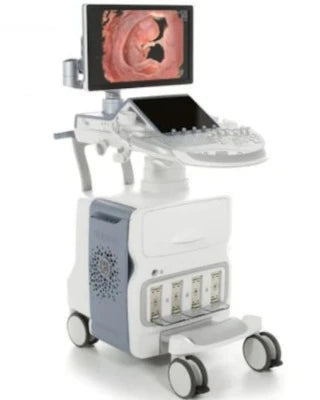
- GE Voluson E10: Women’s Health / OB-GYN.
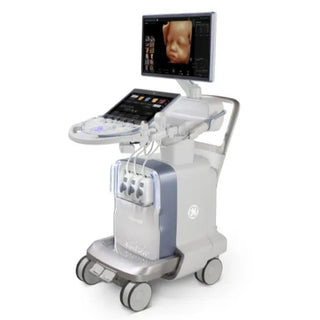
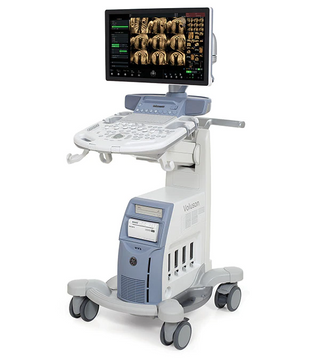
This flagship Voluson system is known for 4D HDlive and advanced probe compatibility. Built for clinics that plan to handle fertility, prenatal, and gynecological imaging at the highest level of precision.
- GE Logiq E10 – General Imaging / Radiology
Designed for abdominal, vascular, musculoskeletal, and interventional radiology. Strong processing power and XDclear probes make it ideal for diagnostic centers and hospitals focusing beyond OB/GYN.
Balanced Mid-Tier (Versatility at Lower Cost)
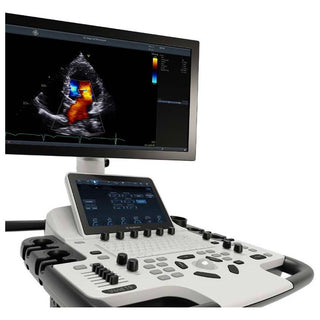
- GE Vivid T9 – Cardiology & Multi-Specialty
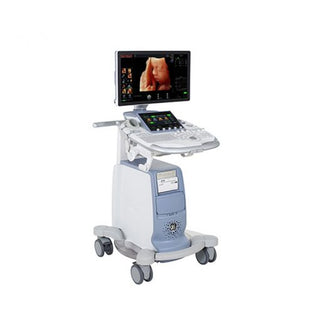
A balanced system with cardiac quantification tools plus solid 2D/3D imaging. Great for startups needing a multi-specialty machine that covers cardiology, vascular, and general exams without premium-level costs.
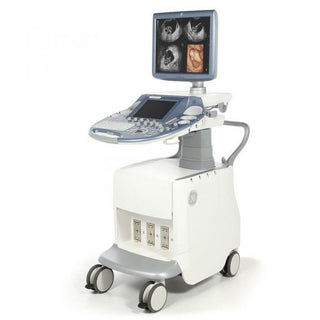
- GE Voluson S8 – Women’s Health (Mid-Level)
A step down from the E10 but still strong in OB/GYN. It’s built for clinics that need 3D/4D capabilities at a lower cost, handling routine OB scans efficiently.
Entry / Budget Tier (Affordable, Practical, or Portable)
- GE Voluson i – Portable Women’s Health & General Imaging
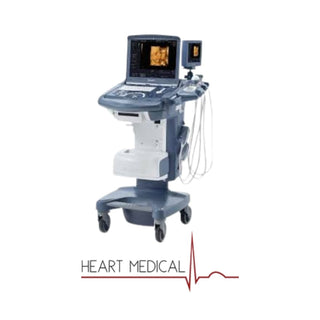
A compact, laptop-style ultrasound. Best for small clinics or mobile setups needing OB and general imaging with basic 3D capabilities at a manageable cost.
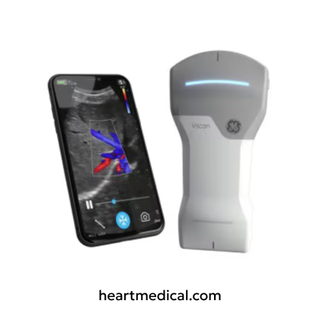
- GE Vscan Air – Handheld Point-of-Care
Pocket-sized device for quick bedside or emergency scans. While it can’t replace a full console, it’s highly valuable for outreach, urgent care, or first-contact settings.
Takeaway
- For women’s health, Voluson models dominate (E10, S8, Voluson i).
- For general imaging, Logiq systems like the Logiq E10 deliver premium value.
- For cardiac or vascular focus, the Vivid T9 stands out.
- For budget-limited or space-constrained clinics, portable options like Voluson i or Vscan Air offer entry points into GE technology.
Cost Breakdown: What You Actually Pay Beyond the Sticker Price

| Cost Category | What It Covers | Impact on Startups | Example |
|---|---|---|---|
| Probes & Transducers | Convex, linear, cardiac, and transvaginal probes (often needed in sets of 2–3) | Major upfront add-on cost; more probes = broader exam capability | A new OB/GYN clinic may need both a convex and a transvaginal probe |
| Service & Maintenance | Annual service contracts, preventive maintenance, repairs | Protects from downtime and unexpected repair bills; usually 10–15% of machine cost per year | A $50K system may need $5K annually for service |
| Software & Feature Upgrades | Advanced imaging modules (4D, elastography, AI tools, Doppler packages) | Expands functionality but adds licensing costs | Voluson E10 HDlive 4D upgrade vs. base package |
| Training & Workflow Setup | Staff training, onboarding, workflow customization | Essential for full ROI; prevents underuse of features | First-time clinic staff learning Doppler functions |
| Consumables & Daily Use | Gels, wipes, imaging paper, cleaning supplies | Recurring expense; scales with patient volume | 100+ scans per month = steady cost in supplies |
| Energy & Space | Power usage, room setup for console systems | Higher for full consoles, minimal for portable units | Voluson i in a small room vs. E10 requiring a dedicated suite |
| Resale & Trade-In Value | Resale price when upgrading | Offsets long-term cost; GE holds value better than many brands | Reselling a T9 after 5 years helps fund the next upgrade |
Maximizing Value: Tips for Getting More for Less
Buying a GE ultrasound machine is a major step, but startups don’t always need to pay the highest price to get the right system. With careful planning, clinics can maximize value and lower long-term costs.
Consider Refurbished Options
Certified refurbished GE systems (often 2–5 years old) can save 30–40% off retail while still delivering excellent imaging quality. For first-time buyers, this is often the most cost-effective entry point.
Match Features to Clinical Needs
Pay only for what you’ll use. If your clinic focuses on routine prenatal scans, a Voluson i or Voluson S8 may be sufficient. High-end features like elastography or advanced 4D should only be purchased if your services will actively use them.
Bundle Probes and Accessories
Instead of buying probes individually later (at higher prices), negotiate a bundle when purchasing the machine. Getting your core probes upfront reduces downtime and ensures better pricing.
Evaluate Service Contracts
Service packages can look expensive, but a single breakdown may cost more than a year of coverage. Balance the cost of coverage against your projected patient volume and risk tolerance.
Plan for Future Growth
Start with what you need today, but choose a machine with room to expand. For example, the Vivid T9 allows upgrades and probe additions, making it suitable for clinics that plan to broaden services over time.
Explore Trade-In Programs
GE systems hold resale value. Many providers offer trade-in credit when upgrading to a newer model. Factoring resale value into your decision lowers your effective long-term cost.
Why Buy from Authorized Resellers
At Heart Medical, we take pride in being an authorized GE reseller trusted by clinics nationwide. When you choose us, you’re not just buying a machine — you’re investing in reliability, long-term support, and peace of mind.
We provide:
- Access to new, demo, and certified refurbished GE ultrasound systems.
- A full range of replacement probes, parts, and accessories whenever you need them.
- Expert service support and warranty coverage, ensuring your clinic stays operational without costly downtime.
Our goal is to help first-time buyers and growing clinics make smarter investments that last. With Heart Medical, you know your ultrasound solution is backed by a partner that values your success as much as you do.
Explore the GE ultrasound machine collection.
Frequently Asked Questions
Are GE ultrasound machines good?
Yes. GE ultrasound machines are considered among the best in the industry, offering reliable image quality, advanced features, and strong resale value. They are widely trusted in hospitals, diagnostic centers, and private clinics worldwide.
Which company is best for ultrasound machines?
Several brands compete globally, but GE is consistently ranked as a top choice due to its wide range of systems that balance performance, innovation, and cost. Other leading names include Philips and Siemens, but GE is often the go-to for startups because of its versatility.
Where is GE ultrasound manufactured?
GE Healthcare manufactures ultrasound systems across multiple global facilities, including the United States and Asia, while maintaining strict quality standards to ensure consistent performance across all regions.
What are GE ultrasound machine uses?
GE ultrasound machines are used for a wide range of applications, including obstetrics and gynecology, cardiology, vascular studies, abdominal scans, musculoskeletal imaging, and point-of-care diagnostics. Different models are designed for specific specialties, ensuring clinics can choose the right fit for their needs.
Choosing the right GE ultrasound machine is about more than comparing prices. It’s about finding the balance between clinical performance, long-term reliability, and financial sustainability.
Reviewed by Heart Medical Clinical Applications Team
Clinical and technical specialists ensuring accuracy and relevance across all Heart Medical content.
Related Products