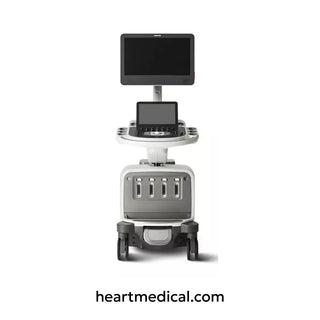
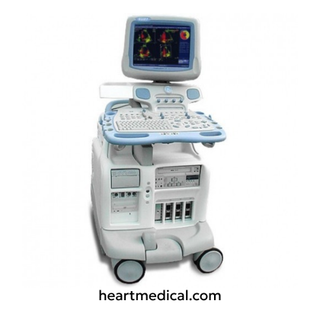
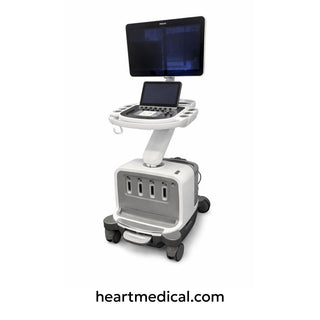
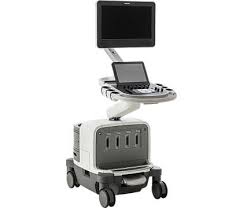
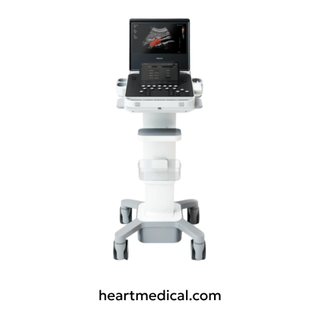
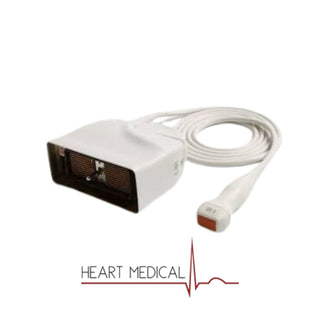
GE Vivid or Philips Epiq — which is better?
For solo cardiologists and small outpatient practices, Philips typically wins on ease of use and faster staff onboarding. For hospital-based cardiology departments and high-volume multi-provider groups, GE typically wins on versatility and long-term serviceability. For budget-conscious practices under $75K, either brand works well in refurbished form (GE Vivid E9 or Philips iE33).
The right choice depends on three factors: your daily patient volume, your staff experience level, and your service location.
Here's the complete comparison.
QUICK DECISION FRAMEWORK |
|
|
|
Both companies make world-class cardiac ultrasound machines. They're used in top hospitals and private clinics everywhere.
The real differences show up in daily use:
- Exam speed
- Learning curve
- Probe ecosystem
- Reporting workflow
- Service availability
- Total cost over 5-10 years
We work with both brands as a certified reseller and service partner. We see what happens after installation: uptime, upgrades, training, and resale value.
By the end of this guide, you'll know which platform fits your practice. Not which machine looks best on paper — which one works best in reality.
Practice-Type Comparison: Which System Fits Your Clinic?
|
Your Practice Type |
Best Fit |
Why |
|
Solo cardiologist, outpatient focus |
Philips Affiniti CVx or Philips CX50 (refurbished) |
Highly intuitive interface, fast onboarding for staff, compact footprint, strong stress echo performance |
|
Multi-provider cardiology group |
GE Vivid E95 or Philips EPIQ CVx |
Both support heavy daily volume; GE offers particularly strong TEE capabilities |
|
Hospital-based, multi-specialty |
GE Vivid E90 |
Broad flexibility across cardiac, vascular, and general imaging needs |
|
Budget-conscious practice |
Refurbished GE Vivid E9 or Philips iE33 |
Proven platforms with wide parts availability and 40–50% lower cost |
|
Advanced 3D/4D cardiac imaging |
Philips EPIQ Elite or GE Vivid E95 (4D-capable) |
Essentially tied: Philips excels with xMatrix technology; GE with advanced 4D rendering |
Not sure which category you fall into? Send an inquiry to our experts.
What Actually Matters in a Cardiology Ultrasound (And What Doesn't)
When practices compare GE vs Philips cardiac ultrasound systems, they often focus on specs: processing power, probe counts, display size, and marketing terms.
In real clinical settings, those factors rarely determine success.
What matters is whether the ultrasound machine consistently produces reliable studies. Can it integrate into your workflow? Does it support your patient population without slowing you down?
Both manufacturers build premium platforms used at the highest levels of medicine. Failures in practice almost never occur because a machine "can't produce good images."
They occur because the system is difficult to use, poorly supported, mismatched to exam volume, or expensive to maintain.
Which System Has Better Image Quality?
When evaluating the best cardiology ultrasound for your practice, image quality alone rarely determines the winner.
From a diagnostic standpoint, both GE and Philips deliver top-tier cardiac imaging. Any modern Vivid or EPIQ system will produce studies suitable for advanced interpretation, certification, and surgical planning.
The differences lie in how each platform handles challenging patients and specific clinical scenarios.
GE vs Philips: Real-World Image Differences
GE strengths: GE's cardiac imaging systems use software-driven beamforming (cSound) with XDclear transducers (source: GE Healthcare). This gives stronger penetration and better imaging for difficult patients — especially those with obesity, lung disease, or poor acoustic windows.
Philips strengths: Philips emphasizes hardware innovation through PureWave crystal technology and nSIGHT imaging architecture (source: Philips). These designs excel at near-field resolution and fine tissue detail, especially when precise border definition is critical for measurement.
Both platforms support advanced imaging modes including color Doppler for blood flow assessment.
What This Means for Your Practice
High BMI, COPD, or post-surgical patients → slight practical edge to GE
Pediatric cases, small chambers, or high-detail structural assessment → slight practical edge to Philips
Routine adult echo → both perform very well
The honest reality? Image quality alone almost never determines purchasing decisions.
We rarely see systems replaced for poor image quality. In over a decade serving cardiology practices, capability is almost never the problem.
When practices upgrade or switch platforms, the reasons are workflow limits, service issues, compatibility constraints, or lifecycle costs — not image performance.
Workflow and Interface: This Is Where You'll Feel the Difference
In day-to-day cardiology practice, workflow matters far more than raw imaging capability.
A system that lets your team work efficiently delivers more value than one with slightly better specs. Simple workflow beats complex features.
GE Workflow Profile
GE cardiac platforms typically offer extensive presets, deep custom setup, and fine control over imaging parameters.
Experienced sonographers often appreciate this flexibility, particularly in complex studies where manual adjustment improves diagnostic confidence.
The trade-off? A steeper learning curve. New hires or cross-trained staff may take longer to become fully productive.
Best suited for: Practices with stable, highly experienced echo teams that want detailed control over image acquisition.
Downside: Training time for new staff can be significantly longer. This matters in markets with staffing shortages or turnover.
Philips Workflow Profile
Philips systems are particularly user friendly, with touchscreen controls that reduce training time.
They prioritize an intuitive, touchscreen-centric interface with streamlined menus and guided workflows. Most users reach baseline competency quickly, even without extensive prior experience on the platform.
Best suited for: Clinics with rotating staff, multiple locations, or frequent onboarding needs.
Downside: Highly experienced users sometimes feel constrained by the simplified control structure compared to GE's deeper custom setup options.
Real-World Example
We've seen multi-provider practices change platforms specifically to reduce onboarding friction.
In one three-physician cardiology group, training time for new sonographers decreased from several weeks to roughly one week after moving to a more intuitive system. That's a meaningful improvement in productivity during staffing transitions.
Probe Ecosystem and Long-Term Cost
Probe strategy is one of the most overlooked factors in a cardiac ultrasound comparison. Yet it often drives long-term cost more than the base system itself.
A common question: GE vs Philips probe compatibility. The answer? Neither brand's probes work on the other's systems. Both are exclusive ecosystems.
GE Probe Ecosystem
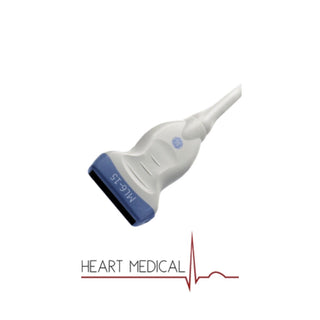
GE offers a very broad range of cardiac transducers. This includes highly specialized options for structural heart procedures, neonatal imaging, and advanced TEE applications. This flexibility helps hospitals and advanced heart care programs.
Typical pricing ranges:
- Standard phased-array probe: approximately $8K–$15K
- TEE probe: approximately $25K–$35K
Philips Probe Ecosystem
Philips provides slightly fewer models overall but maintains very high performance across core cardiac probes. Many clinicians regard Philips' matrix-array TEE probes as the strongest available for structural imaging.
Typical pricing ranges:
- Standard phased-array probe: approximately $7K–$12K
- TEE probe: approximately $22K–$32K
Total Cost of Ownership Insight
Over a five-year period, ultrasound probe purchases, replacements, and repairs can represent 30–40% of the original system cost. This is particularly true in high-volume practices or environments with heavy TEE use.
You cannot use a GE probe on a Philips system, or vice versa. This locks you into a long-term vendor path once you choose a platform.
Service, Parts Availability, and Turnaround Time
Service logistics rarely appear in marketing materials. Yet they often determine whether a system is an asset or a liability.
For many practices, especially those at full capacity, downtime has immediate financial and clinical consequences.
An ultrasound service contract for GE vs Philips systems varies by region. Here's what to expect:
GE Service Profile
GE maintains one of the largest ultrasound service networks in the United States. Parts availability is strong, and many qualified third-party service providers are familiar with Vivid platforms.
- Typical repair turnaround: ~5–7 business days
- Parts availability for systems 8+ years old: generally excellent
- Strong coverage outside major metro areas
Philips Service Profile
Philips provides high-quality support but operates with a smaller field service footprint in some regions. Turnaround times can be longer, particularly in rural or underserved areas. Fewer independent service vendors specialize in Philips systems.
- Typical repair turnaround: ~7–10 business days
- Parts availability for systems 8+ years old: generally good, though declining for older models
-
Coverage strongest in major metro areas
What This Means in Daily Use
If your practice cannot tolerate extended downtime, or if you operate outside a major urban center, GE may offer a practical logistical advantage.
Conversely, clinics located near major medical hubs typically have adequate support options for either platform.
Service reliability, not headline features, often determines long-term satisfaction. Practices that think about maintenance upfront have fewer disruptions in daily use.
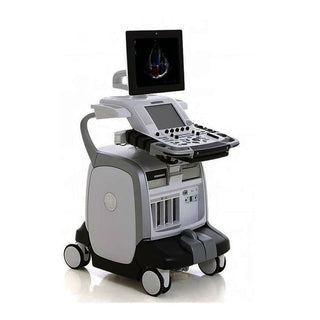
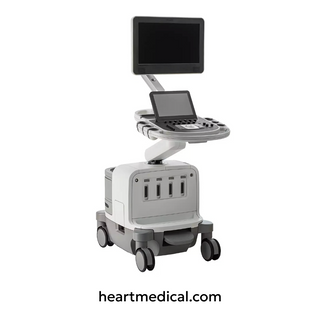
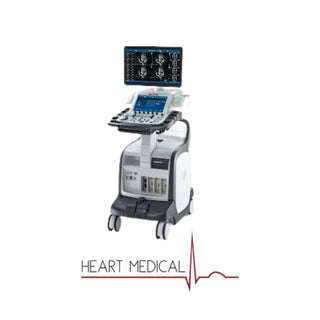
Side-by-Side Comparison: GE Vivid E95 vs Philips EPIQ CVx
This cardiac ultrasound comparison focuses on real-world differences, not just specs.
For practices evaluating Vivid vs EPIQ at the flagship level, the comparison typically centers on GE's Vivid E95 and Philips' EPIQ CVx.
Both represent premium platforms capable of advanced echo, structural heart imaging, and high-volume clinical use.
The differences are less about capability and more about workflow emphasis, probe strategy, and daily fit.
|
Feature |
GE Vivid E95 |
Philips EPIQ CVx |
|
Primary Use |
General cardiology, TEE, stress echo |
General cardiology, advanced 3D/4D imaging |
|
Display |
22" OLED — exceptional contrast and motion clarity |
24" high-resolution LCD touchscreen |
|
Probe Ports |
3 standard + dedicated pinned TEE port |
4 standard compact ports |
|
Imaging Technology |
cSound 3.0 beamforming, XDclear transducers |
xMatrix technology, PureWave crystals |
|
4D Cardiac Imaging |
Yes (requires 4Vc-D or 6VT-D probe) |
Yes (native xMatrix matrix-array support) |
|
Automated EF Tools |
Yes — AFI (Automated Function Imaging) |
Yes — HeartModel AI |
|
Typical Price (New) |
$110K–$140K |
$115K–$145K |
|
Typical Price (Refurbished) |
$45K–$75K |
$50K–$80K |
|
Best Fit |
High-volume departments, hospital cardiology |
Outpatient clinics, structural imaging, crossover specialties |
From a pure capability standpoint, GE Vivid vs Philips EPIQ is not a matter of one system being "more advanced."
Both support modern echo protocols, quantitative analysis, and structural procedures.
The practical distinction is how efficiently each integrates into your environment, especially if you perform significant TEE, stress testing, or advanced 3D studies.
Frequently Asked Questions
Which brand has better image quality?
Both produce diagnostic-grade cardiac images suitable for advanced clinical use. GE may perform slightly better in technically difficult patients, while Philips often excels in near-field detail and border definition. For the vast majority of routine heart ultrasound, the difference is minimal.
Can I use GE probes on a Philips system?
No. Both manufacturers use exclusive connectors and software ecosystems. Probes are not swappable between brands.
How long will a refurbished system last?
A properly maintained refurbished cardiac ultrasound system typically provides about 3–5 years of reliable service. New systems commonly remain clinically useful for 8–12 years.
Which platform is easier to learn?
Philips systems generally require less onboarding time. New sonographers often reach competency in roughly one to two weeks, whereas GE systems may take several weeks to master due to deeper custom setup options.
What if I need service in a rural area?
GE typically offers broader service coverage outside major metro regions. Philips support is strong in urban centers but can involve longer response times in rural locations.
Should I buy the latest model or save money on an older one?
Budget is the primary factor. Under roughly $75K, proven refurbished platforms such as Vivid E9 or iE33 offer excellent value. At higher budgets, newer systems like the Vivid E95 or EPIQ CVx provide meaningful workflow improvements and advanced measurement features.
When to Choose GE
GE systems tend to excel in environments that prioritize flexibility, throughput, and long life.
Many hospital departments and large cardiology groups favor GE because the platform adapts well to diverse clinical demands and staffing models.
You should lean toward GE if most of the following apply:
- You perform high-volume TEE studies (dedicated pinned TEE port speeds workflow)
- You need cross-specialty flexibility: cardiac, vascular, and occasional OB or pediatric imaging
- Your facility is outside a major metro area and depends on broad service coverage
- Your sonographers are highly experienced and prefer deep control
- Your patient population includes many technically difficult cases (obesity, COPD, limited acoustic windows)
- You plan to keep the system for a decade or longer and want strong long-term parts availability
Real-World Scenario
Hospital-based programs often select GE because of its flexibility across departments.
In one multi-specialty cardiology service, the decision favored a Vivid platform primarily because the same machine supported cardiac, vascular, and prenatal cardiac studies. This reduced the need for separate equipment and simplified maintenance planning.
In these environments, flexibility and reliability typically outweigh interface preferences or small differences in imaging features.
When to Choose Philips
Philips cardiac platforms tend to perform best in environments where usability, consistency, and rapid staff productivity matter more than deep system control.
Many buyers ask: GE or Philips for a small cardiology clinic?
For solo or 2-physician practices, Philips often wins on ease of use. Many outpatient clinics and smaller cardiology groups prefer Philips because the systems are easier to learn, easier to standardize across operators, and efficient for routine echo services.
You should lean toward Philips if most of the following apply:
- You prioritize ease of use and fast staff onboarding
- You perform a high volume of 3D/4D cardiac imaging (matrix-array technology is a major strength)
- Your practice experiences frequent sonographer turnover or uses rotating staff
- You prefer a touchscreen-driven workflow rather than control-panel complexity
- Stress echo is a core service line and exam speed matters
- You operate primarily as an outpatient cardiology clinic rather than a hospital system
Philips Excels at Point of Care Ultrasound
Philips systems are particularly strong when consistency across operators is critical.
Standardized presets and guided workflows reduce differences between studies. This can improve reporting efficiency and reduce repeat scans.
Real-World Scenario
Outpatient practices often see measurable productivity gains after switching to a more intuitive platform.
In one two-physician cardiology clinic, moving from an older system to a modern Philips platform resulted in a noticeable increase in stress echo throughput. This was largely because staff could complete protocols with fewer manual adjustments and less setup time.
For practices focused on high patient flow, predictable exam times, and simplified training, Philips frequently represents the lower-friction choice.
Refurbished vs New: Which Makes Sense?
For many buyers comparing GE vs Philips ultrasound systems, the real decision isn't brand — it's whether to buy new or refurbished.
Both manufacturers produce equipment designed for long clinical lifecycles. This makes the secondary market very strong in cardiology imaging.
The right choice depends on budget, expected use, and how long you plan to keep the system.
When Refurbished GE or Philips Is the Right Call
When comparing refurbished GE Vivid vs Philips Epiq, both deliver excellent value at 40-50% cost savings.
Refurbished systems can deliver outstanding value when purchased from a reputable provider that performs full testing, calibration, and cosmetic restoration.
Many private practices operate successfully for years on refurbished platforms.
Refurbished typically makes sense when:
- You are launching a new practice or adding capacity
- Your budget is under approximately $75K
- You do not require the newest AI-driven imaging features
- You accept a shorter remaining lifecycle (typically 3–5 years vs. 8–10 years for new systems)
Common high-value refurbished platforms include:
- GE Vivid E9 — Predecessor to the E95, still clinically excellent. Typical price: $38K–$55K
- Philips iE33 — Longstanding workhorse platform widely used in cardiology. Typical price: $30K–$50K
- GE Vivid 7 — Entry-level budget option that remains serviceable for basic echo. Typical price: $15K–$25K
These systems are proven, widely supported, and familiar to many sonographers. This reduces training requirements compared to adopting unfamiliar equipment.
When to Buy New
New systems represent a larger upfront investment but offer longer lifespan, full warranty protection, and access to the latest imaging capabilities.
For high-volume practices, the long-term economics often favor new equipment.
Purchasing new is typically justified when:
- You intend to keep the system for a decade or more
- Advanced measurement tools or AI-assisted analysis are important
- Patient volume supports a strong return on investment
- Downtime risk must be minimized through full manufacturer support
- You want predictable maintenance costs during the warranty period
New flagship platforms also provide access to ongoing software upgrades. This can extend clinical relevance as imaging techniques evolve.
What We Tell Our Own Family Practices
"When a cardiologist asks us, 'So which ultrasound is better for a cardiology practice?', we always start with three questions: How many sonographers will use it? How critical is uptime? And what's your five-year plan?"
"If you have one highly experienced sonographer and a stable practice environment, a GE system often provides deep control and strong long-term service support."
"If you're growing, hiring, or want a system that multiple users can operate comfortably, Philips tends to reduce training time and daily friction."
"And here's what we never say: 'This one is better.' Because it isn't. Both manufacturers produce exceptional cardiology platforms. The real question is which one aligns with how your practice operates."
— Heart Medical Clinical Advisory Team
Beyond the Brand: What Else Should You Consider?
A cardiac ultrasound comparison should never stop at hardware.
Long-term success depends on financing structure, training quality, and future upgrade paths.
Practices that evaluate these factors upfront tend to avoid costly surprises later — regardless of whether they choose GE or Philips.
Financing and Payment Options
Most cardiology practices do not purchase imaging systems outright in cash, especially at flagship price levels.
- Manufacturer financing: Typically available from both GE and Philips, often in the ~4–7% APR range depending on credit profile and term length
- Third-party medical financing: Frequently more competitive, commonly ~3–5% APR with flexible structures
- Leasing vs. buying: Leasing makes sense if you plan to upgrade within 3–5 years or want lower upfront cost. Purchasing is better for long-term ownership and lower total interest over time
Financing terms can significantly change the true cost of ownership — sometimes more than brand selection itself.
Training and Support
Operator skill directly affects exam quality, throughput, and physician confidence.
Even the most advanced system underperforms without proper training.
- GE manufacturer training: Typically paid, often $2K–$5K per session
- Philips manufacturer training: Similar structure, typically $2K–$4K per session
- Included support (Heart Medical): Basic hands-on training with every system we deliver. Remote support during the first 90 days post-installation. Practical guidance focused on real clinical workflows
For smaller practices without dedicated training budgets, bundled onboarding support can significantly reduce ramp-up time.
Trade-In Value
Lifecycle planning matters, especially if you expect to upgrade within five to seven years.
- GE cardiac systems historically retain resale value slightly better — often 5–10% higher after five years
- Philips systems depreciate somewhat faster but remain highly tradable due to strong clinical demand
- Both brands maintain robust secondary markets
If you already own an ultrasound system, trade-in value can meaningfully offset upgrade costs. We evaluate equipment from either manufacturer and regularly accept both GE and Philips platforms.
Next Steps: How to Choose the Right System for Your Practice
Not Sure Which System Fits Your Practice?
We help cardiologists evaluate systems based on workflow realities, staffing, patient mix, and long-term service considerations — not just specifications.
Schedule a brief consultation for straightforward, pressure-free guidance.
Talk to our expert
Ready to See What's Available?
If you already know what you need, you can review current inventory with detailed condition reports, pricing, and shipping timelines.
Whether you choose GE or Philips, you are investing in a world-class cardiac imaging platform.
The real distinction is not which brand is objectively superior, but which aligns with your clinical workflow, daily constraints, and long-term plans.
That perspective — practical, honest, and patient-focused — defines what we mean by Where Quality Meets Conscience.
Reviewed by Heart Medical Clinical Applications Team
Clinical and technical specialists ensuring accuracy and relevance across all Heart Medical content.
Related Products