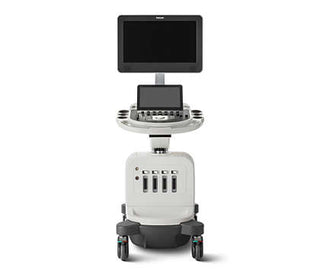
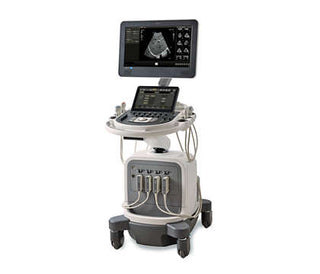
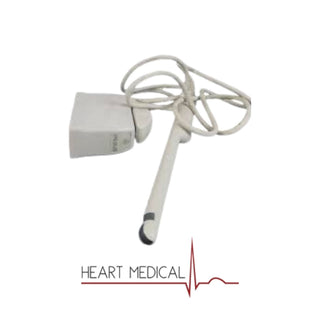
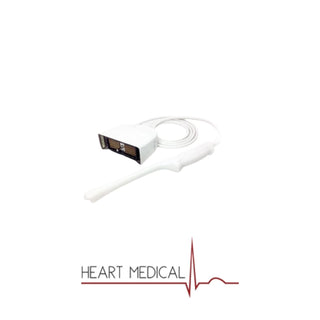
If you're researching ultrasound system prices, you've probably discovered that there isn't a single answer.
In 2026, ultrasound machines sold in the United States typically range from around $2,000 for handheld point-of-care devices to more than $250,000 for premium cardiovascular platforms. The final price depends on factors such as the system category, whether it's new or refurbished, the transducers included, software packages, warranty coverage, installation requirements, and long-term service costs. This guide explains current pricing, what drives the cost of an ultrasound system, how the major brands compare, and how to evaluate quotes based on total cost of ownership rather than the initial purchase price. Ready to compare real configurations? Browse our ultrasound machines or request a customized quote.
Ultrasound Machine Price Ranges at a Glance (2026)
|
System Category |
Typical Price Range |
Best For |
|
Handheld / Portable POCUS |
$2,000–$15,000 |
Emergency medicine, bedside imaging, primary care |
|
Compact Cart-Based |
$15,000–$60,000 |
Outpatient clinics, OB/GYN, mobile imaging |
|
Mid-Range Cart-Based (Refurbished) |
$25,000–$60,000 |
Cardiology practices, imaging centers |
|
Mid-Range Cart-Based (New) |
$35,000–$80,000 |
Hospital echo labs, growing practices |
|
Premium Cart-Based (Refurbished) |
$40,000–$90,000 |
High-volume cardiovascular imaging |
|
Premium Cart-Based (New) |
$80,000–$250,000+ |
Tertiary hospitals, academic medical centers |
These ranges represent typical U.S. market pricing. Actual costs vary depending on configuration, probes, software licenses, warranty coverage, and manufacturer.

What Determines the Cost of an Ultrasound System?
Although two ultrasound machines may appear similar, their prices can differ dramatically. The biggest factors include:
1. New vs. Refurbished
New systems offer the latest hardware, software, and manufacturer support. Refurbished premium systems can often deliver comparable image quality at 30 to 60 percent less than their original list price when properly recertified.

Refurbished categories (gold) deliver premium capability at a significantly lower entry point.
2. Included Transducers
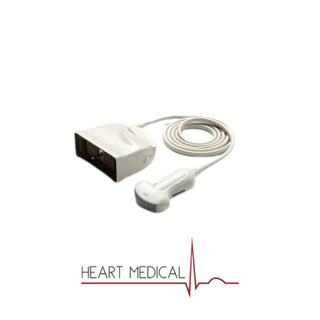
One of the most common pricing mistakes buyers make is comparing systems without confirming the included probes.
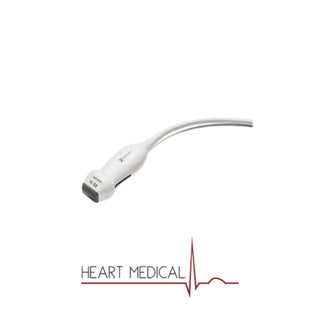
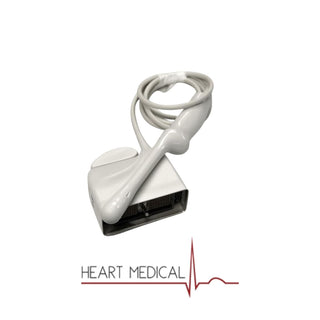
Specialty transducers can cost anywhere from $3,000 to more than $15,000 each. Two systems with nearly identical base prices may differ by tens of thousands of dollars once probes are included.

Typical 2026 transducer prices by type. TEE probes are the most expensive single accessory on a quote.
|
Transducer Type |
Typical Price Range |
Common Uses |
|
Linear array |
$2,000–$6,000 |
Vascular, MSK, shallow structures |
|
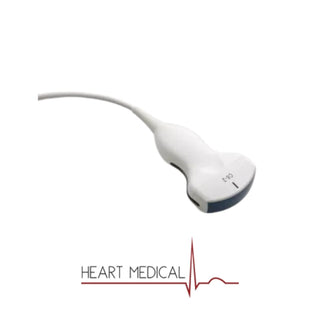
Curved (convex) array |
$3,000–$8,000 |
Abdominal, OB/GYN |
|
Phased array |
$4,000–$10,000 |
Cardiac (echo) imaging |
|
Endocavitary |
$3,000–$8,000 |
Transvaginal, transrectal exams |
|
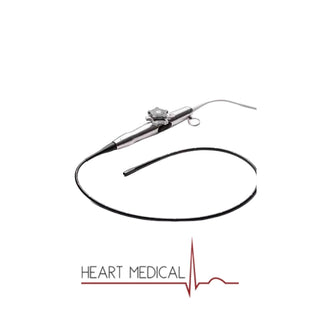
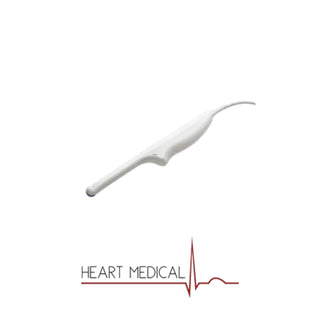
TEE (transesophageal) |
$15,000+ |
Advanced cardiac imaging |
Always ask exactly which transducers are part of the quote.
3. Clinical Applications
Advanced capabilities can significantly affect pricing, such as:
- AI-assisted measurements
- Strain imaging
- 3D/4D imaging
- Transesophageal echocardiography (TEE)
- Automated reporting
- Workflow automation
4. Clinical Specialty
Different specialties require different hardware — from cardiology ultrasound systems to point-of-care and emergency ultrasound. Examples include:
- Cardiology
- Women's health
- Vascular imaging
- Musculoskeletal
- General imaging
- Emergency medicine
The broader the clinical capability, the higher the investment.
5. Brand Tier
Manufacturer positioning has a real effect on price. Premium-tier brands such as GE HealthCare, Philips, Siemens Healthineers, and Canon Medical command higher prices and hold value longer on the refurbished market. Value-tier brands such as Mindray deliver strong image quality at a lower price point, often with longer warranties on new units.
Neither tier is universally “better.” A value-tier system with the right probes frequently outperforms a premium system configured poorly for your specialty. As a distributor carrying Philips, GE HealthCare, Mindray, and Siemens ultrasound systems, we recommend comparing at least one system from each tier before deciding.
6. Service and Warranty
A lower purchase price isn't always the better value. Warranty length, preventive maintenance, software updates, loaner equipment, and technical support all influence long-term ownership costs. Learn more about our service and repair options.
7. Installation and Integration
Additional costs may include:
- Shipping (Heart Medical includes free shipping on most items across the continental U.S.)
- Installation (quoted at an hourly rate plus travel expenses; can be bundled into your proposal)
- PACS integration and EMR connectivity (coordinated as part of delivery for our imaging systems)
- Staff training (available on request, quoted at time of purchase)
- Network configuration
Heart Medical can bundle these into a single proposal so you see the full cost structure before committing.
Ultrasound Machine Price by Category
Handheld & Portable POCUS Systems
Typical Price: $2,000–$15,000
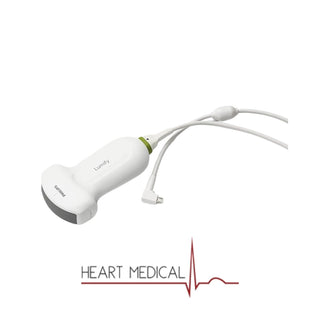
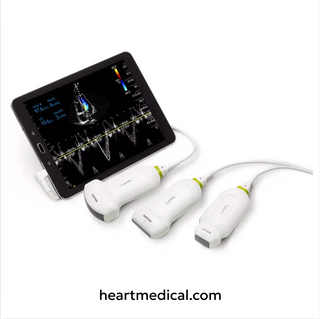
Examples in this category include GE HealthCare's point-of-care family (such as the Vscan Air) and laptop-style portable systems from Philips and Mindray.
Best for:
- Emergency medicine
- Critical care
- Family medicine
- Internal medicine
- Bedside imaging
Advantages
- Highly portable
- Lower upfront investment
- Quick deployment
- Ideal for rapid assessments
Limitations
- Smaller displays
- Limited advanced imaging capabilities
- Not intended for comprehensive cardiac studies
Compact Cart-Based Systems
Typical Price: $15,000–$60,000
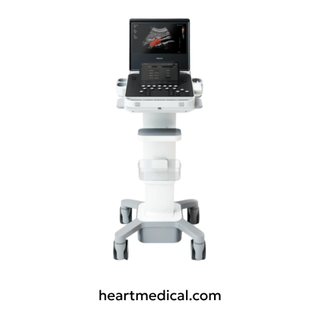
Popular examples include the Philips Compact 5500 and ClearVue series, with Mindray's cart systems offering especially strong value in this category.
Best for:
- OB/GYN
- Mobile imaging
- Small hospitals
- Community clinics
Advantages
- Excellent image quality
- Smaller footprint
- Full-size workflow
- Lower operating costs
Mid-Range Cart-Based Systems
Typical Price:
- Refurbished: $25,000–$60,000
- New: $35,000–$80,000
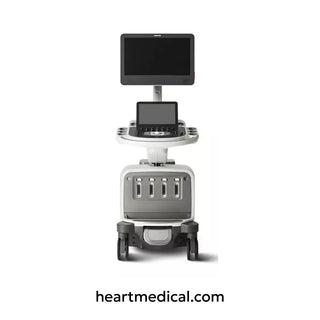
Popular examples include the Philips Affiniti CVx for cardiology and GE HealthCare's Vivid S-series. For OB/GYN and women's health, GE's Voluson family is the category benchmark.
Best for:
- Busy cardiology clinics
- Hospital echo labs
- Multi-specialty practices
Modern AI-powered workflow tools can automate routine cardiac measurements, reduce manual steps, improve consistency between sonographers, and shorten exam times.
Premium Cardiovascular Systems
Typical Price:
- Refurbished: $40,000–$90,000
- New: $80,000–$250,000+
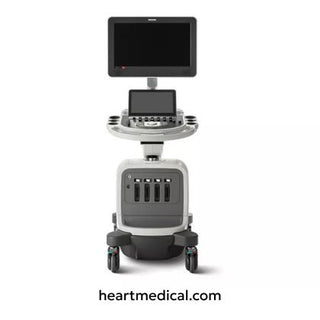
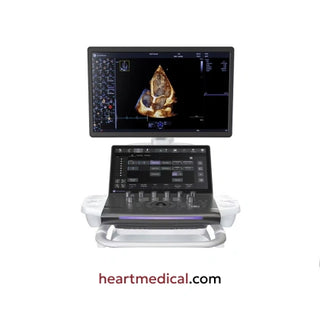
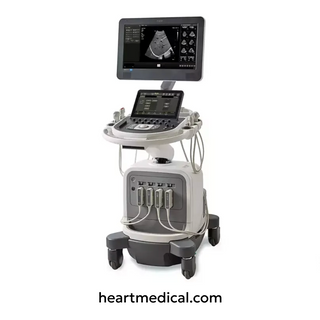
Premium platforms such as the Philips EPIQ CVx and GE HealthCare's Vivid E-series are designed for organizations performing advanced cardiovascular imaging.
Ideal for:
- Structural heart programs
- Academic hospitals
- High-volume echo labs
- Advanced cardiac imaging
These systems provide advanced visualization, 3D/4D imaging, TEE capabilities, and sophisticated AI-assisted workflows.
New vs. Refurbished: Which Is Right for You?
Both options can be excellent investments.
Choose New If You Need:
- The latest generation software
- Maximum product lifecycle
- Full manufacturer support
- Longest warranty coverage
Choose Refurbished If You Want:
- Premium imaging at a lower investment
- Better return on investment
- Faster payback period
- Higher-end technology within a fixed budget
A properly refurbished ultrasound machine should include:
- Manufacturer-approved recertification
- Comprehensive testing
- Cosmetic restoration
- The applicable manufacturer warranty, coordinated through the distributor
- Ongoing technical support
Not ready to buy? Equipment rentals and financing options can bridge the gap while you evaluate.
Ultrasound Total Cost of Ownership: A Real Example
The purchase price is only part of the investment. Over five years, ownership costs typically include:
- System purchase
- Transducers
- Service agreements
- Software upgrades
- Staff training
- Preventive maintenance
- Probe replacement
Here is how two real-world quotes for a similar mid-range ultrasound machine can compare:
|
Item |
Quote A |
Quote B |
|
System price |
$55,000 |
$64,000 |
|
Annual service |
$8,000 |
Included |
|
Additional probe |
Not included |
Included |
|
Extended warranty |
Not included |
Included |
|
Estimated 5-year ownership |
$102,000+ |
$88,000 |

Five-year view: the $55K quote ends up costing $14,000 more than the $64K quote.
Although Quote B costs more upfront, it delivers a lower overall cost of ownership.
How to Compare Ultrasound Quotes
Before making a purchase decision, ask every vendor:
- Which transducers are included?
- Is installation included?
- Are shipping costs included?
- What warranty is provided?
- Are software updates included?
- Is clinical training included?
- Are financing options available?
- What is the average service response time?
- Are loaner probes available during repairs?
- What upgrades are available in the future?
These questions often reveal differences that aren't immediately obvious from price alone.
Common Ultrasound Machine Buying Mistakes
Many buyers unintentionally increase long-term costs by:
- Comparing quotes with different probe configurations
- Focusing only on purchase price
- Ignoring service contract costs
- Buying more system than their workflow requires
- Overlooking software licensing fees
- Forgetting PACS integration costs
- Not evaluating long-term support
Choosing the right system means balancing clinical needs, workflow efficiency, reliability, and total ownership costs.
How Heart Medical Helps
Choosing an ultrasound system is a long-term investment.
At Heart Medical, our goal isn't simply to sell equipment. We help healthcare providers understand the trade-offs between new and refurbished systems, compare manufacturers honestly — including the Philips, GE HealthCare, Mindray, and Siemens systems we carry — and select equipment that supports both their clinical objectives and their budget.
Our team helps you:
- Compare new and refurbished systems side by side
- Select the right probe configuration
- Understand warranty options
- Evaluate financing solutions
- Match equipment to your workflow
- Receive transparent pricing without hidden surprises
We believe buyers should have enough information to make confident, informed decisions.
Request a Customized Quote
Every healthcare facility has different imaging needs. We'll help you compare:
- Multiple manufacturers
- New and refurbished options
- Probe configurations
- Warranty coverage
- Financing options
- Estimated delivery timelines
Most customized quotes can be prepared within one business day. Request a quote here, contact our team, or call us directly at +1 (833) 409-4600.
Frequently Asked Questions
How much does a new ultrasound machine cost?
Most new ultrasound machines range from approximately $35,000 to over $250,000, depending on specialty, software, and configuration.
Are refurbished ultrasound systems reliable?
Yes. When purchased from a reputable distributor that recertifies equipment to manufacturer specifications and coordinates the applicable manufacturer warranty on your behalf, refurbished systems can deliver excellent performance while significantly reducing acquisition costs.
How much do ultrasound probes cost?
Depending on the type and specialty, individual transducers typically range from $2,000 to more than $15,000. Linear and convex probes sit at the lower end; TEE probes are the most expensive.
How long does an ultrasound machine last?
With proper maintenance, many premium ultrasound systems remain clinically useful for seven to ten years or longer.
Is leasing better than buying?
That depends on your organization's cash flow, replacement cycle, and capital budget. Financing or leasing may allow facilities to acquire advanced technology while preserving working capital.
Should software updates be included?
Some manufacturers include software updates during the warranty period, while others charge separately. Always confirm this before purchasing.
Which ultrasound brand offers the best value?
There is no universal answer. Premium brands (GE HealthCare, Philips, Siemens) hold value and lead on advanced features; value brands (Mindray) deliver more capability per dollar with strong warranties. The best system depends on your specialty, workflow, patient volume, and budget — comparing at least one system from each tier is often the best approach.
Why aren't ultrasound prices listed on every product page?
Because pricing depends heavily on configuration, probe selection, software packages, warranty options, and whether the system is new or refurbished. A published base price rarely reflects the actual cost of the system you'll receive.
About Heart Medical
This guide was researched and written by the Heart Medical team — the equipment specialists, service technicians, and product experts at Heart Medical, a U.S. distributor of top-brand certified medical equipment based in Carlsbad, California. We help healthcare providers compare certified new and refurbished imaging systems transparently — across manufacturers, configurations, and total cost of ownership.
Sources
- Fortune Business Insights — Ultrasound Equipment Market Size & Growth Analysis (2026–2034)
- Philips Ultrasound — official product portfolio
- GE HealthCare Ultrasound — official product portfolio
- Mindray Medical Imaging — official product portfolio
- Heart Medical 2026 U.S. market pricing data, based on distributor quotes and configurations across new and certified refurbished systems
Reviewed by Heart Medical Clinical Applications Team
Clinical and technical specialists ensuring accuracy and relevance across all Heart Medical content.
Related Products